Surface Finishing Services for Metal & Plastic Parts
Meco offers full surface finishing services in one place. Anodizing, chrome plating, PVD, powder coating, and more, all built into one quality-checked workflow.

What Are Surface Finishing Services?
Surface finishing services are the steps a manufacturer takes after a part is made to change its outer layer. The finish can add a coating (like anodizing, plating, or powder coating), or change the surface chemistry (like passivation). For a side-by-side look at finish grades, see our surface finish chart, or dig into the exact surface finish Ra values that drawings call out.
At Meco, surface finishing runs inside the same shop as CNC machining, die casting, metal stamping, and mechanical assembly. To see how this fits into a larger production plan, read what industrial manufacturing involves.

Why Surface Finishing Services Matter
Surface finishing services protect your parts from rust, wear, and damage, while giving them the look your brand needs. The right finish also depends on how the part was machined, so it helps to know the surface finish each machining process can reach. Want help picking the right partner? Read our guide on how to find a manufacturer for your product.
Why Choose Meco for Surface Finishing Services
Better finishes, faster turnaround, and lower total cost on every job.
10+ Finish Types
We offer anodizing, plating, painting, powder coating, e-coating, and hot-dip galvanizing.
40+ Steps Under One Roof
From finishing to milling, turning, drilling, tapping, heat treatment, and assembly, we handle it all in one place.
Metals & Plastics
We work with aluminum, stainless steel, carbon steel, brass, copper, titanium, and common engineering plastics.
Certified Quality
IATF 16949:2016 certified, with strong quality checks, traceability, and material standards.
How Does the Surface Finishing Process Work?
The surface finishing process moves your part through 7 controlled steps, from inspection to packaging.
Incoming Inspection
We check parts against your drawing and order before they move to the next step. Any issues are caught early.
Surface Prep
Parts are cleaned and prepared so the finish goes on smoothly.
Masking
We cover threads, contact points, and any areas that should stay uncoated.
Finish Applied
We apply the chosen finish, such as anodizing, plating, painting, powder coating, or PVD.
Cure & Set
The finish is set and hardened so it performs as intended.
QC Check
We inspect the finish for thickness, coverage, and appearance before packing.
Pack & Ship
Parts are packed safely and shipped with the needed quality paperwork.
Types of Surface Finishes We Offer
Pick a finish below to see materials, specs, standards, and common uses. Not sure which one is right? Our engineers will help you choose.
Anodizing (Type II & Type III)
Anodizing builds a hard, rust-fighting layer right into the aluminum. Type II is the standard option for color and basic protection. Type III, also called hardcoat, adds extra strength for high-wear surfaces. You can find more on roughness levels in our surface finish chart.
- Materials
- Aluminum, Titanium
- Thickness
- Type II: 0.0002 to 0.0012 in. Type III: about 0.002 in
- Standards
- MIL-A-8625 (Type I, II, III), MIL-DTL-5541F
- Salt Spray
- Type II: 336 to 500 h. Type III: 1,000+ h
- Aluminum parts that need rust protection
- Colored finishes for consumer electronics and housings
- Aerospace and automotive wear parts
- Medical device housings
Chrome Plating
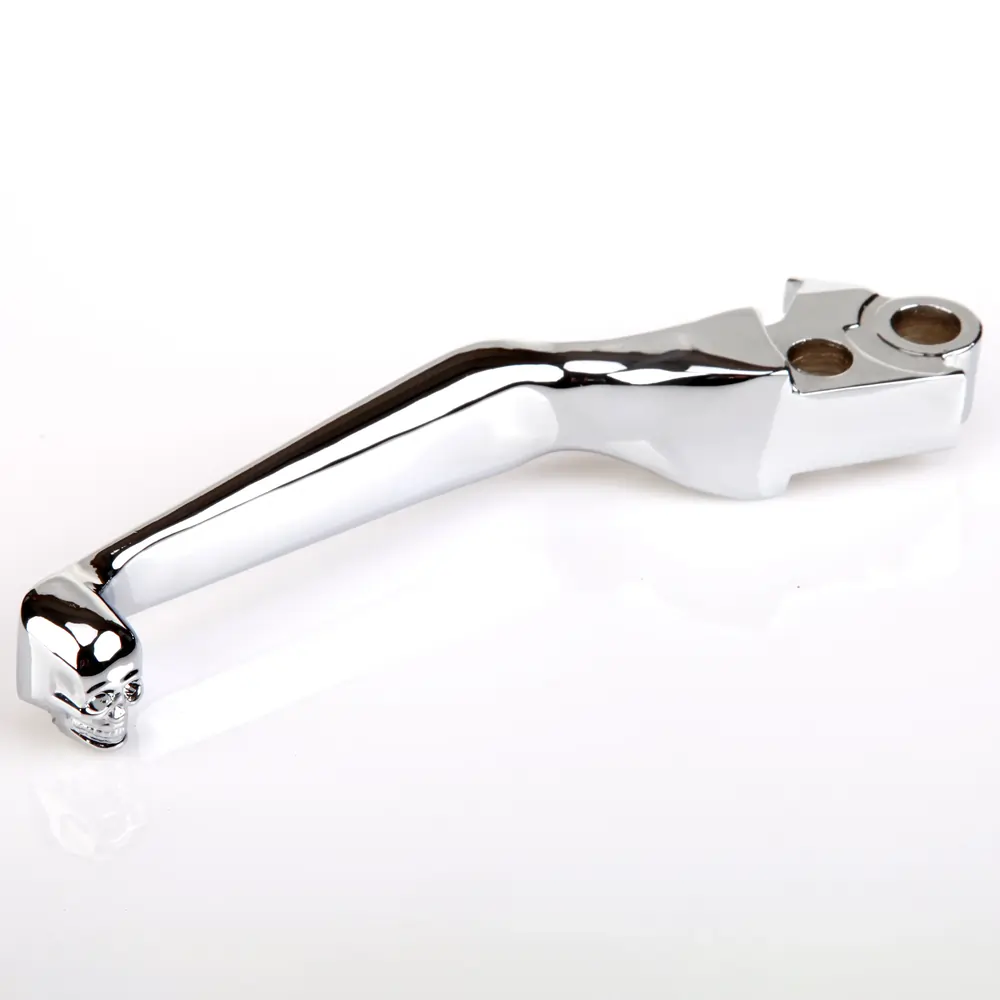
Chrome plating gives you both strength and a bright look. Hard chrome (65 to 70 HRC) handles heavy wear and reduces friction on shafts and rollers. Decorative chrome adds a shiny mirror finish to handles, trim, and fixtures.
- Materials
- Aluminum, Steel, Brass, Bronze, Copper, Zinc
- Thickness
- Hard: 0.001 to 0.010 in. Decorative: 0.00001 to 0.00003 in
- Hardness
- 65 to 70 HRC (hard chrome)
- Friction
- Very low, great for shafts, rollers, and cylinders
- Automotive parts that need wear protection and shine
- Hydraulic cylinders and parts
- Furniture and fixture trim
- Machine spindles and rollers
Zinc Plating
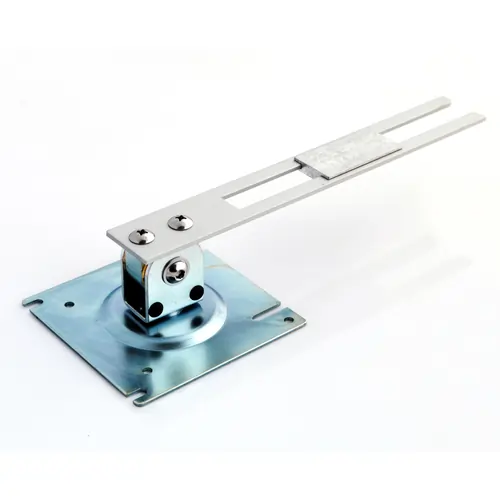
Zinc plating is a low-cost way to protect steel from rust. The finish comes in clear, yellow, black, or trivalent options. It also works well as a base layer before paint or powder coating.
- Materials
- Steel
- Top Layer
- Clear, Yellow, Black, Trivalent
- Standards
- ASTM B633
- Salt Spray
- 96 to 500 h (depends on top layer)
- Automotive screws, bolts, and hardware
- Industrial brackets and clips
- Base layer before paint or powder
- General steel rust protection
Nickel Plating
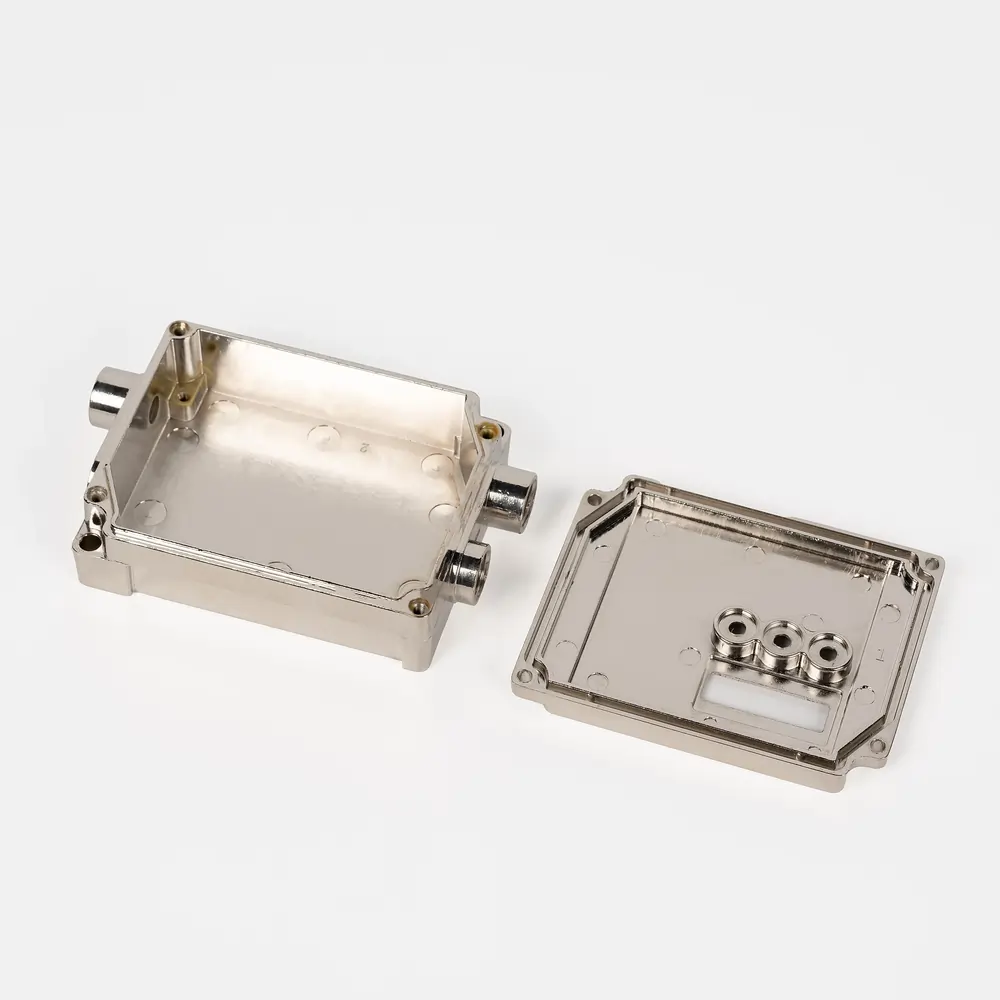
Nickel plating gives you a smooth, shiny look and helps fight rust. It also works well for parts that need to carry an electric signal, like connectors. It is often used as a base layer before chrome or other top coats.
- Materials
- Aluminum, Steel, Stainless, Brass, Copper
- Thickness
- Starts at 0.0001 in
- Standards
- ASTM B733
- Best For
- Easy soldering and signal flow
- Electronic connectors
- Kitchen and bathroom fittings
- Automotive trim
- Smooth base for top coats
Electroless Nickel Plating
Electroless nickel coats every surface evenly, even inside holes and tight corners, without using electric current. We can adjust the phosphorus level to dial in the hardness and rust resistance you need.
- Materials
- Aluminum, Steel, Stainless, Brass, Copper
- Hardness
- 48 to 52 HRC (after heat treat)
- Standards
- ASTM B733, AMS-2404
- Salt Spray
- 500 to 1,000+ h
- Oil and gas tools (rough environments)
- Valves and pumps
- Aerospace actuators
- Molds (release and rust protection)
PVD Coating
PVD stands for Physical Vapor Deposition. The process uses a vacuum to lay a very thin, very hard coating onto the part. Common coatings include TiN, TiAlN, and CrN. PVD adds wear protection and color at the same time.
- Materials
- Aluminum, Steel, Stainless, Brass, Copper
- Coatings
- TiN, TiAlN, CrN
- Best For
- Hardness plus decorative color
- Common Uses
- Cutting tools, medical, aerospace, luxury goods
- Cutting and forming tools
- Surgical tools
- Aerospace turbine parts
- High-end consumer goods
Painting (Liquid Coating)
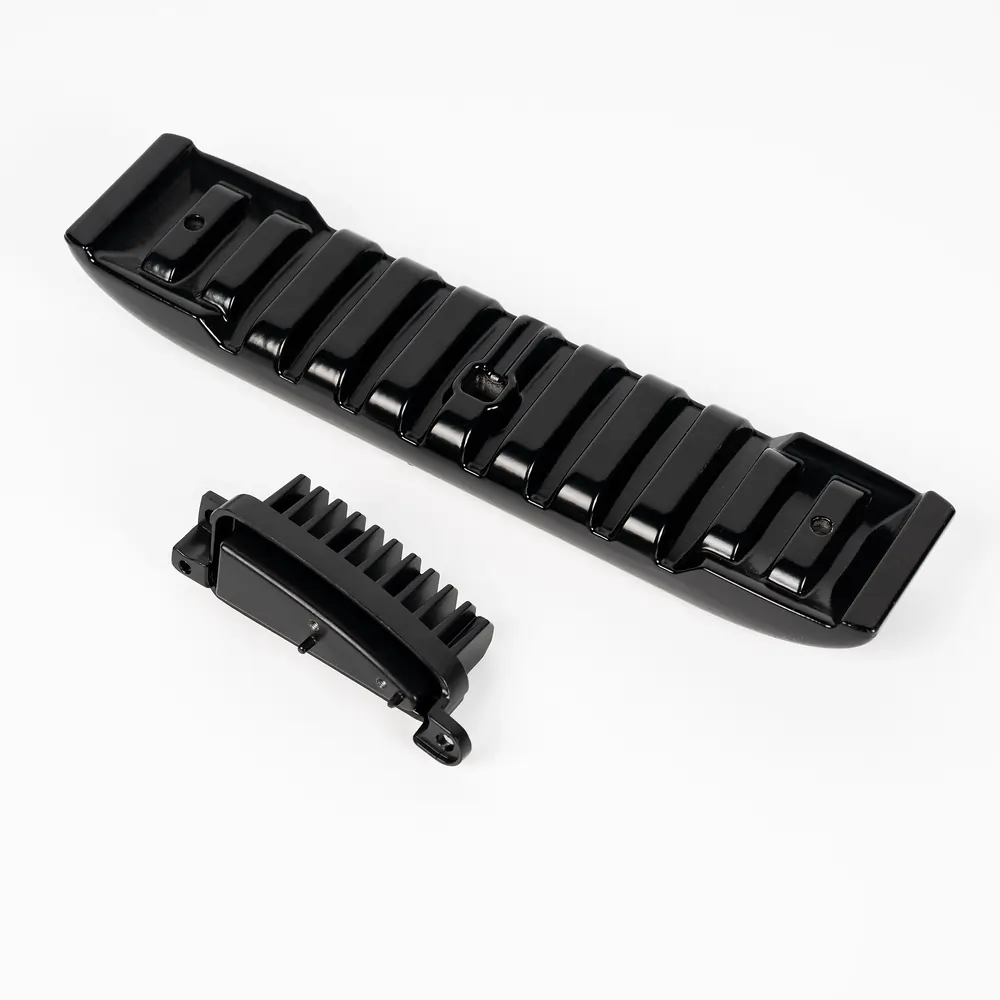
Liquid paint gives you a clean look in any custom color. It is a good fit for parts that cannot handle the heat used in powder coating. We can match your exact brand color on housings, panels, and covers.
- Materials
- Aluminum, Steel, Stainless, Brass, Copper
- Standards
- ISO 15184, ISO 2409
- Best For
- Custom colors and heat-sensitive parts
- Cost Tier
- $$
- Appliance shells in brand colors
- Electronics housings
- Safety panels and barriers
- Parts that cannot handle high heat
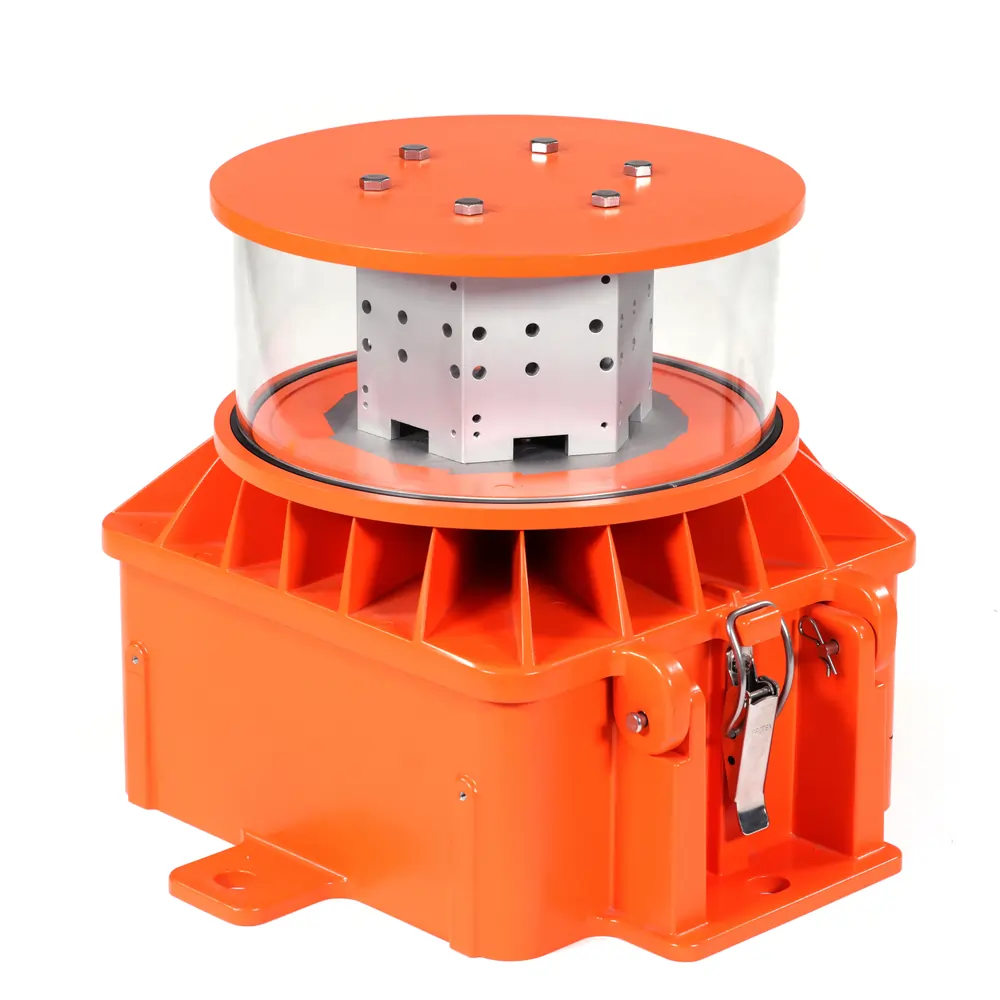
Powder Coating
Powder coating uses a dry powder that sticks to the part using static electricity. The part then goes into an oven at about 200°C to melt the powder into a tough, even layer. The result holds up well against weather, chemicals, and daily wear. For pricing tips, see how much powder coating costs.
- Materials
- Aluminum, Steel, Stainless, Brass, Copper
- Thickness
- 0.002 to 0.006 in
- Standards
- ASTM D7803
- Salt Spray
- 500 to 1,000 h
- Outdoor gear and enclosures
- Automotive frame parts
- Office and shop furniture
- Brackets and frames left outside
E-Coating (Electrocoat)
E-coating works by dipping the part into a paint bath while a small electric charge pulls the coating into every gap. That means even hidden spots, like the inside of a tube, get covered. It works as a primer or as a stand-alone rust-proof finish.
- Materials
- Aluminum, Steel, Stainless, Brass, Copper
- Best For
- Full coverage on tricky shapes
- Common Uses
- Auto frames, marine parts, electrical housings
- Eco Note
- Very low VOC emissions
- Auto frames and sub-frames
- Electrical housings (waterproof)
- Assemblies with hidden gaps
- Marine parts (salt resistance)

Galvanizing (Hot Dip)
Hot-dip galvanizing dips the steel into melted zinc at about 450°C. The result is a thick layer that protects the steel for decades, even outdoors. This is the go-to choice for heavy steel parts used in construction and industry. Curious why some galvanized parts look darker than others? Read why hot-dip galvanized steel turns dark.
- Materials
- Steel
- Standards
- ASTM A123, GB/T 13912
- Best For
- Decades of outdoor rust protection
- Common Uses
- Structural steel, guardrails, heavy equipment
- Outdoor structures (beams, poles, frames)
- Street furniture and guardrails
- Heavy machine parts
- Construction and infrastructure
Surface Finish Comparison Table
A surface finish comparison helps you narrow your choice before you talk to our engineers. Use this table to match a finish to your material, budget, and use case.
| Finish | Materials | Rust Protection (Salt Spray) | Hardness | Size Change | Cost | Best For |
|---|---|---|---|---|---|---|
| Anodizing Type II | Aluminum | 336 to 500 h | Medium | +0.0002 to 0.0012 in | Colored aluminum parts, electronics | |
| Anodizing Type III | Aluminum | 1,000+ h | High | About 0.002 in | Aerospace, auto wear parts | |
| Chrome Plating | Al, Steel, Brass, Cu, Zn | High | 65 to 70 HRC | +0.001 to 0.010 in | Shafts, rollers, hydraulics | |
| Zinc Plating | Steel | 96 to 500 h | Low | +0.0002 to 0.0005 in | Fasteners, brackets, hardware | |
| Nickel Plating | Al, Steel, SS, Brass, Cu | Medium | Medium | +0.0001+ in | Electronics, trim, base layer | |
| Electroless Nickel | Al, Steel, SS, Brass, Cu | 500 to 1,000+ h | 48 to 52 HRC | Even on all surfaces | Oil & gas, valves, molds | |
| PVD | Al, Steel, SS, Brass, Cu | Medium to High | Very High | Barely any | Cutting tools, surgical, luxury | |
| Painting | All metals | Medium | Low | Varies | Housings, panels, brand colors | |
| Powder Coating | All metals | 500 to 1,000 h | Medium | +0.002 to 0.006 in | Outdoor, furniture, frames | |
| E-Coating | All metals | High | Low | Very thin, even | Auto frames, tricky shapes | |
| Galvanizing | Steel | Very High | Medium | Thick layer | Structures, guardrails, heavy gear |
Want a deeper look at roughness values, Ra grades, and finish symbols? Check our surface finish chart guide, the full list of surface finish Ra values, and how to read surface finish symbols on a drawing.
How to Choose the Right Surface Finish for Your Part
Pick a finish by answering 4 quick questions about your part. Still stuck? Send your CAD and we'll recommend one.
What is the part material?
- Aluminum: Anodizing Type II or III
- Steel: Zinc plating, powder coat, galvanizing
- Stainless: Passivation, electropolishing, PVD
- Plastic (ABS): Chrome plating, PVD, paint
Indoor or outdoor use?
- Indoor: Nickel, Type II anodize, paint
- Outdoor (light): Powder coat, zinc plate
- Outdoor (heavy): Hot-dip galvanizing, E-coat
- Marine/Chemical: Electroless nickel, hardcoat
Cosmetic or functional?
- Pure looks: Decorative chrome, paint, PVD
- Wear resistance: Hard chrome, hardcoat anodize
- Conductivity: Nickel, electroless nickel
- Both: Powder coat or PVD
Budget and volume?
- Low cost / high vol: Zinc, powder coat
- Mid range: Anodize, paint, nickel
- Premium: PVD, hardcoat, hard chrome
- Low MOQ: All finishes, no minimum
For roughness grades, see our surface finish chart guide and the full breakdown of surface finish Ra values.
Surface Finishing for Plastic Parts
Plastic parts get a metal look or extra protection through chrome plating, PVD, and paint. We finish plastics in the same workflow as our plastic injection molding services.
Chrome Plating on ABS
Gives ABS and ABS+PC parts a real metal finish at a fraction of the weight and cost. Common on car trim, faucet handles, and consumer electronics.
PVD on Plastics
A vacuum-applied coating in colors like gold, black, rose, or rainbow. Adds wear protection and an upscale finish to housings, knobs, and trim.
Paint on Plastics
Custom-color liquid paint with primer for strong stick and bump resistance. The most flexible option for matching exact brand colors on plastic housings.
Need Help Choosing the Right Finish?
Send us your CAD files. Our engineers will suggest the best finish for your material, use case, and budget within 24 hours.
Surface Finishing Services for Every Industry
From cars to medical tools to smart appliances, we finish the metal and plastic parts that go inside the products you use every day. Pick your industry to see the finishes we use most.
Automotive Parts
Zinc plating, e-coating, chrome, and powder coating for engine mounts, brackets, battery housings, and EV drivetrain parts. Often paired with our die-cast metal parts.
Aerospace & Defense
Type III hardcoat anodize, chromate conversion, and electroless nickel for flight-critical brackets, housings, and actuators in titanium and aluminum. See our aerospace guide.
Medical Devices
Passivation, electropolishing, and Type II anodize on 316L stainless steel and titanium implants, tools, and housings. Body-safe finishes with full lot-level paperwork.
Heavy Equipment
Hard chrome, galvanizing, and powder coating for hydraulic cylinders, frames, and pivot pins. Built to last in outdoor, muddy, and underground use.
Industrial Manufacturing
Electroless nickel, hard chrome, and zinc plating for valves, manifolds, pump housings, and machine frames. See what industrial manufacturing means.
Consumer Electronics
Nickel plating, Type II anodize, and PVD for connectors, heat sinks, and enclosures. Clean edges and tight fit for press-fit and snap-fit assembly.
5G & Telecom
Chromate conversion, anodizing, and powder coating for cavity filters, antenna mounts, and 5G waveguide ports. Finish quality drives signal performance.
Home Appliances
Powder coating, liquid painting, and e-coating for oven cavities, fridge frames, and laundry panels. Matched to your brand colors at high-volume production.
LED Lighting
Anodizing, powder coating, and PVD for LED housings, building fixtures, and store lighting. Pairs with our aluminum heat sinks for cool-running fixtures.
Commercial Furniture
Chrome, powder coating, and liquid painting for office chairs, sit-stand desks, modular shelving, and contract furniture. Finish and hardware lined up in one workflow.
When to Outsource Surface Finishing
Outsourcing surface finishing services makes sense when in-house equipment, chemistry, or paperwork would slow you down or raise your cost per part.
Capital is Tight
Anodize, plating, and powder coat lines run six figures plus chemistry and waste handling. Outsourcing skips the upfront spend.
Speed Matters
An outside partner with active lines can turn parts in 1 to 2 weeks. Building in-house capacity takes months.
Paperwork is Required
PPAP, FAIR, RoHS, and REACH need a quality team and tracked process. Hard to staff in-house for a side function.
You Need Many Finishes
One vendor with 10+ finish types beats juggling separate anodize, plating, and powder shops.
For a deeper dive into when outsourcing pays off, read our guide on what contract manufacturing involves and the differences in our breakdown of contract manufacturer vs OEM.
Surface Finishing Services FAQ
What are surface finishing services?
Surface finishing services are the steps a manufacturer takes after a part is made to change its outer layer. They can add a coating, smooth the surface, or change the surface chemistry. The goal is better rust protection, longer wear life, and the right look. Common types include anodizing, plating, powder coating, painting, and polishing. For a closer look, see our surface finish chart guide.
What types of surface finishes does Meco offer?
Meco offers 10+ surface finish types in-house: anodizing (Type II and III), chrome plating (decorative and hard), zinc plating, nickel plating, electroless nickel, PVD coating, liquid painting, powder coating, e-coating, and hot-dip galvanizing. Each finish is matched to your material, use case, and budget during the quote.
What is the difference between anodizing and powder coating?
Anodizing builds a layer right into the aluminum, so it is thin and very hard, but it only works on aluminum and titanium. Powder coating sits on top of any metal and gives a thicker, more colorful finish that handles bumps well. If you need long-term rust protection on aluminum, pick anodizing. If you want a wide range of colors on steel or aluminum outdoor parts, pick powder coating. Read our surface finish chart for more side-by-side info.
How does surface finishing change part size?
Every coating adds some thickness. Type II anodize adds 0.0002 to 0.0012 in. Powder coating adds 0.002 to 0.006 in. Hard chrome adds 0.001 to 0.010 in. Our engineers plan for this in the DFM review, so your final size still meets spec. PVD adds almost nothing, and e-coating goes on very thin and even. If your drawing calls out a target roughness, see how we hit it in our surface finish Ra values guide.
Can you finish plastic parts?
Yes. We offer chrome plating, PVD coating, and liquid painting on ABS, ABS+PC, and other engineering plastics. These finishes are common for car trim, consumer electronics, and appliance parts where you want a metal look on a plastic body. You can pair these finishes with our plastic injection molding services in one workflow.
Which finish gives the best rust protection?
For aluminum, Type III hard anodize gives 1,000+ hours of salt spray protection. For steel, electroless nickel (500 to 1,000+ h) and hot-dip galvanizing last the longest outdoors. E-coating is great for steel parts with hidden gaps that other finishes miss. To learn why some galvanized parts look darker than others, see our blog on why hot-dip galvanized steel turns dark.
How much does powder coating cost?
Powder coating cost depends on part size, color, batch size, and prep work. Small batches cost more per part, while big runs drop the price fast. Color changes between runs also raise cost. For a full breakdown with sample prices, see our guide on how much powder coating costs.
How do I read a surface finish callout on my drawing?
A finish callout uses a check-mark symbol with a roughness value and, sometimes, a lay direction or process note. Our step-by-step guide to surface finish symbols shows how to read each part of the callout, while the machining surface finish chart shows which process can reach the Ra you need.
Are Meco finishes RoHS and REACH compliant?
Yes. All Meco surface finishing services ship with full REACH and RoHS paperwork. We use trivalent chromium processes where applicable and maintain CMRT (Conflict Minerals Reporting Template) documentation for SEC/Dodd-Frank compliance on 3TG mineral sourcing.
Can finishing be combined with machining and assembly?
Yes. Meco runs CNC machining, casting, stamping, surface finishing, and mechanical assembly as one workflow. This cuts lead time by 30 to 50 percent and gives you a single point of contact from start to finish. To see how this fits a larger build, read our guide on what industrial manufacturing involves.
How do I get a quote for surface finishing services?
Send us a STEP or IGES file using the form below with your material, finish, and quantity. We come back within 24 hours with a quote and free DFM feedback that typically saves 15 to 30 percent. No minimum order, so we run 10 pieces or 10 million. New to sourcing? Read how to find a manufacturer for your product.
How to Get Started
Upload STEP or IGES files with material, finish, and quantity using the quote form below.
Our engineers review your finish spec against the part geometry and material. You get a quote with DFM feedback in under 24 hours.
We produce a First Article with a full FAI report, including finish thickness, adhesion, and color. You approve before production.
Machining, finishing, and assembly run in one workflow. Parts ship anywhere with full quality paperwork.
Surface Finishing Service Guides
Free guides on roughness charts, powder coating cost, and galvanizing, written by our engineering team.

Surface Finish Chart: Ra Values & Process Guide
A full reference for surface roughness grades, how to measure them, and which process gives which Ra value.

How Much Does Powder Coating Cost?
A pricing guide that covers per-part cost, batch size, color choices, and how to lower your finishing spend.
Why Hot-Dip Galvanized Steel Turns Dark
Find out what causes hot-dip galvanized steel to change color over time and what it means for your project.
