Custom Investment Casting Services
Meco pours stainless steel, carbon and alloy steel, brass, bronze and titanium into ceramic shell moulds, near net shape to ICI linear tolerance, on runs of 500 to 50,000 parts a year.

Why Choose Meco for Investment Casting
Near net shape castings in hard alloys, with machining, treatment and finishing under the same roof.
Least Machining Stock
The ceramic shell copies the wax pattern almost exactly, so castings arrive close to final dimension. That removes machining passes a sand casting would still need.
Hard Alloys, Fine Detail
Stainless 316, 17-4PH and 420, carbon and alloy steel, brass, bronze and titanium. These are the grades a permanent die cannot hold up to.
Complex Geometry
The wax pattern melts out rather than being drawn, so there is no parting line to design around. Thin walls, undercuts and internal passages all cast directly.
Turnkey After Casting
Sealing faces and bores still need cutting. In-house CNC machining, heat treatment and surface finishing mean one supplier and one PO.
Certified Quality System
Every casting cell runs under IATF 16949:2016, which incorporates all ISO 9001:2015 requirements. PPAP, FAI and full lot traceability are standard.
DFM Before the Wax Tool
Every quote comes back with DFM notes inside 24 hours. Design changes agreed before the tool is cut typically remove 15 to 30 percent of part cost.
Investment Casting Parts Gallery
Swipe to view all six parts
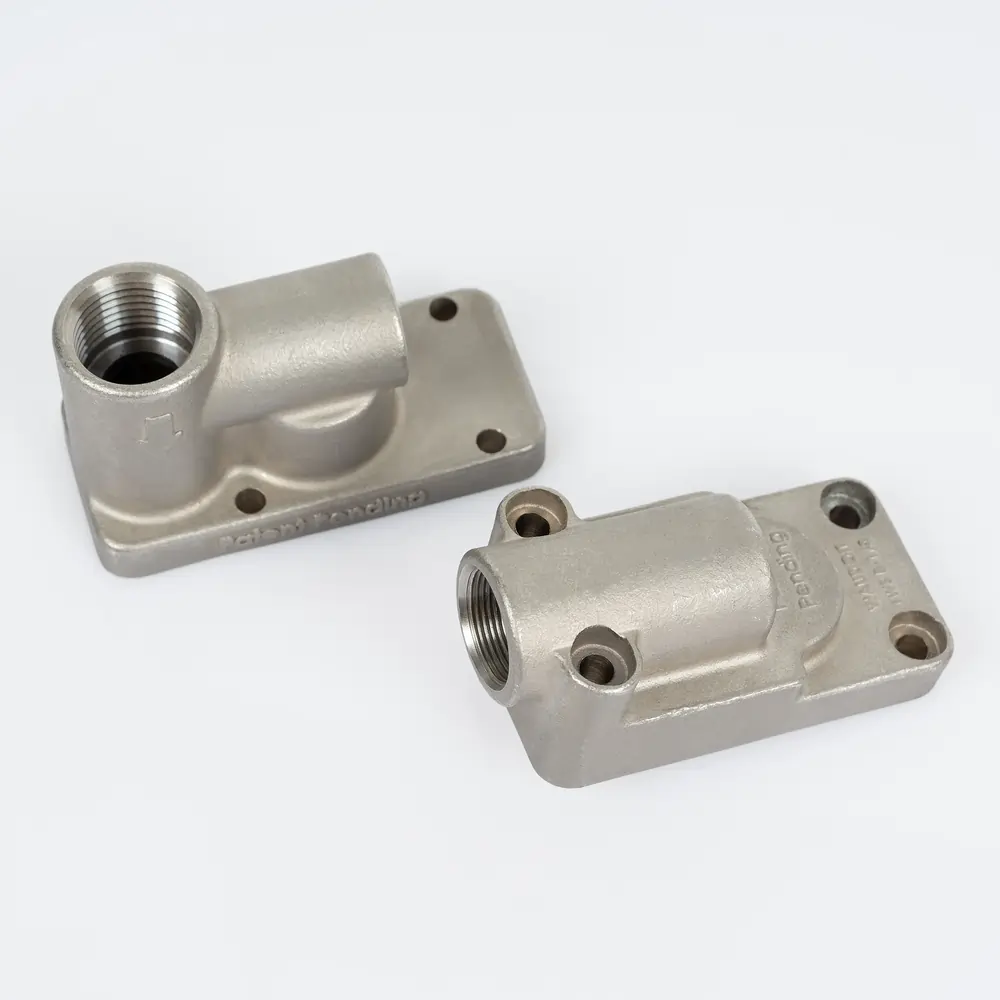
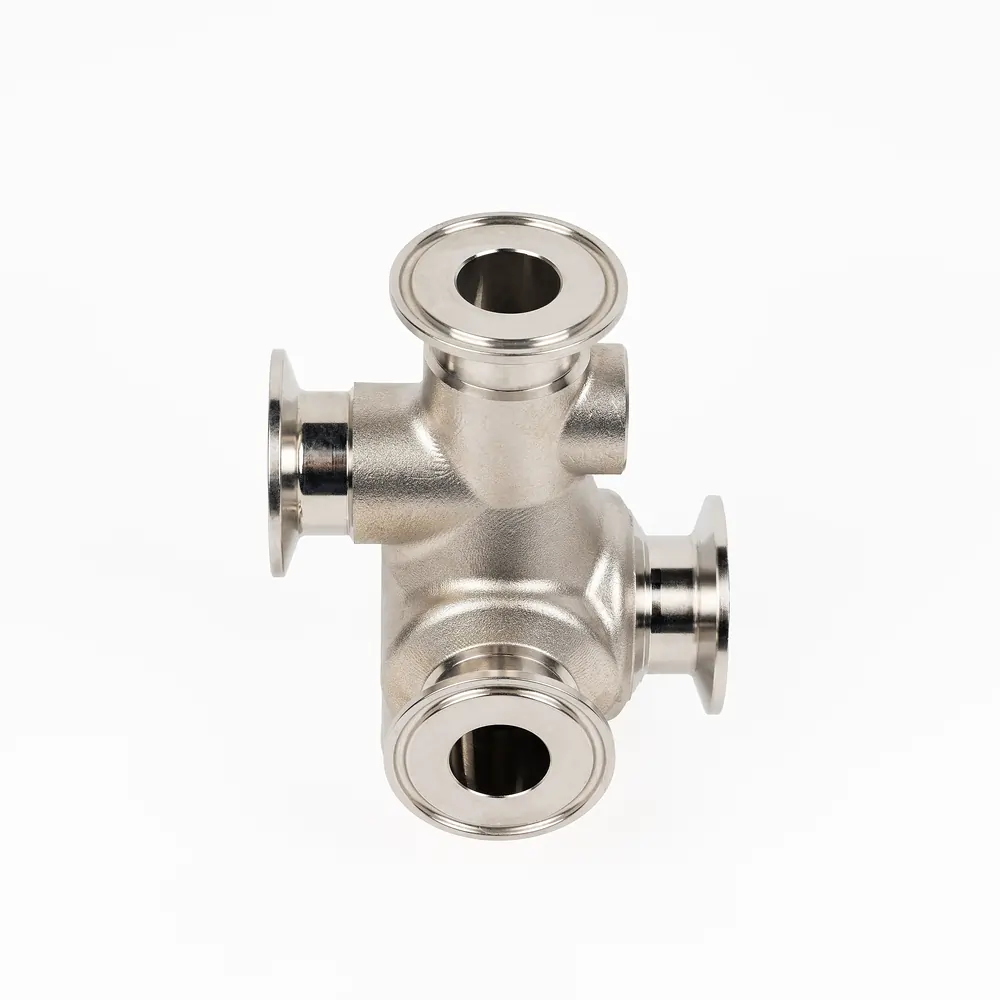
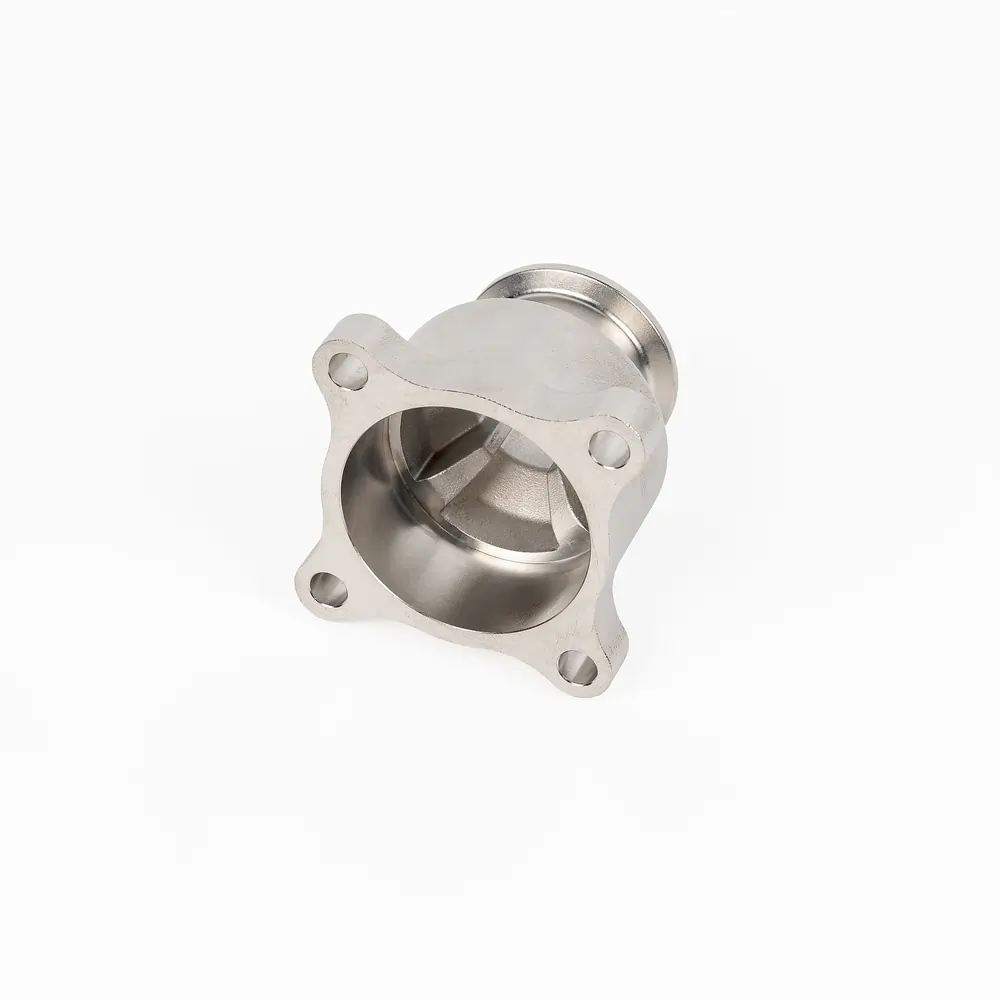
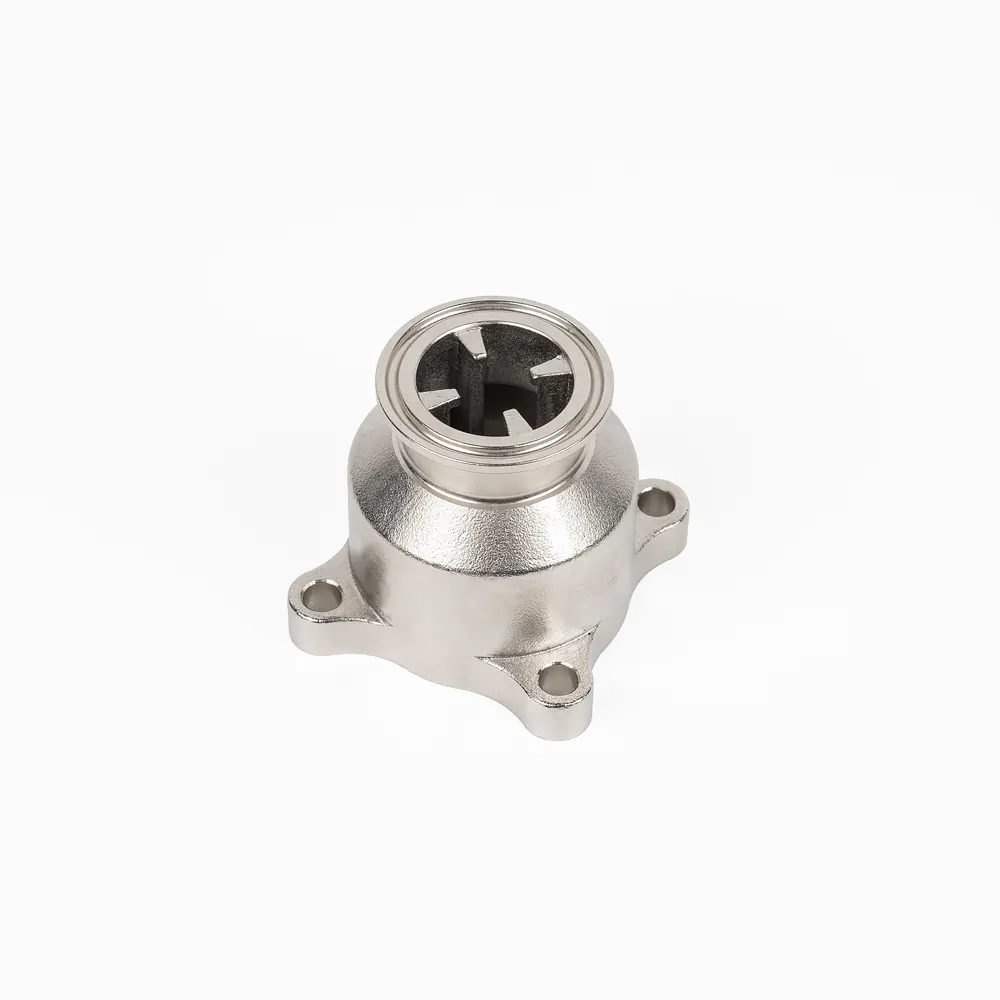
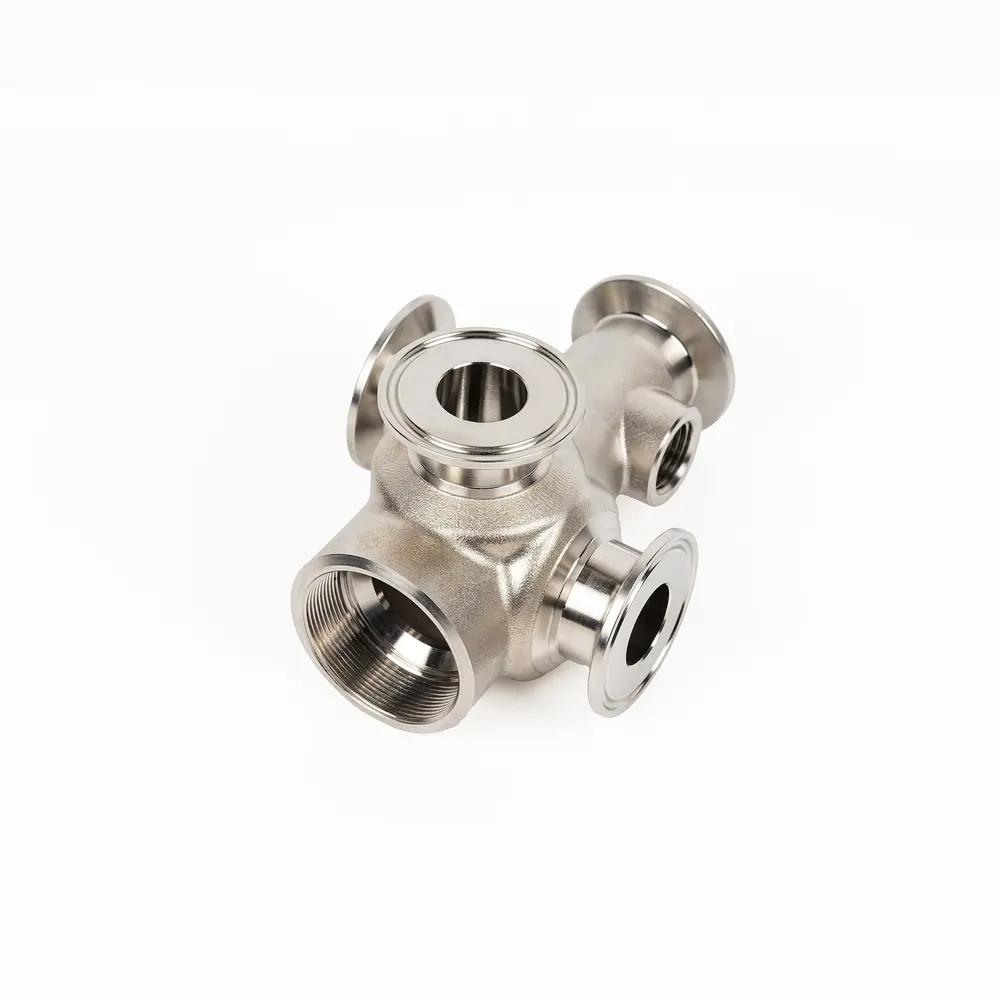
Investment Casting Capabilities
How the shell is built, what the tooling costs, and what happens after the pour.
A wax pattern is injected, assembled onto a runner tree, then dipped repeatedly to build a ceramic shell. The wax is melted out and metal is poured into the cavity that is left. Nothing has to withdraw, so the casting can carry detail a permanent die could never release.
- No parting line to design around
- Near net shape per ICI
Wax tooling runs 3,000 to 15,000 USD, well under a gravity or die casting die. There is no minimum order quantity, and the process is at its most economical between 500 and 50,000 parts a year. Production takes 6 to 12 weeks once tooling is approved.
- Tooling 3,000 to 15,000 USD
- No MOQ, 500 to 50,000 per year
A raw casting is only half the job. Sealing faces, bores and threads are cut in house to 0.01 mm and ISO 2768, then verified on a CMM resolving to 0.002 mm. Heat treatment and finishing run on the same site, so parts ship finished rather than raw.
- 0.01 mm machined features
- X-ray, ultrasonic and dye penetrant NDT
Investment Casting Alloys and Specifications
Meco investment casts stainless, carbon and alloy steel, brass, bronze and titanium, then machines, treats and finishes in house.
Investment casting is the process to reach for when the alloy is hard and the shape is intricate. The ceramic shell is destroyed to release the part, so it can survive pour temperatures that would ruin a permanent die. Every grade below is supplied with EN 10204 3.1 material certificates on request, and certificates are explained in our EN 10204 3.1 guide.
Alloys and Specifications
| Material | Grades | Why it is used | Typical investment cast parts |
|---|---|---|---|
| Stainless steel | 316, 17-4PH, 420 | Corrosion resistance, with 17-4PH heat treatable to high strength | Valve bodies, pump housings, fittings, instrument hardware |
| Steel | Carbon and alloy steel | Strength, wear resistance and impact toughness | Linkages, levers, latches, wear parts, brackets |
| Brass and bronze | Brass, bronze | Castability, bearing properties and corrosion resistance | Impellers, marine fittings, bushings, architectural hardware |
| Titanium | Titanium | Strength to weight ratio with strong corrosion resistance | Lightweight structural fittings and process hardware |
| Standards | Applied throughout | ICI linear tolerance for investment casting, GB/T 6414 general specifications | ISO 8062-3, ISO 286 and ANSI B4.1 for dimensional tolerance |
Scroll inside the table to see all rows and columns
Investment Casting Tolerances and Process Data
| Parameter | Investment casting | Notes |
|---|---|---|
| As-cast tolerance | Near net shape per ICI | Linear tolerance agreed feature by feature at DFM stage |
| Machined features | 0.01 mm, ISO 2768 | Cut on our own CNC machining cells |
| Inspection | CMM to 0.002 mm | Plus X-ray, ultrasonic and dye penetrant NDT |
| Part size | Small and intricate | Best suited to detailed parts rather than large structures |
| Ideal volume | 500 to 50,000 parts per year | No MOQ. Prototypes and single pieces supported |
| Production lead time | 6 to 12 weeks | From approved tooling and released PO |
| Wax tooling | 3,000 to 15,000 USD | Second lowest tooling cost of the five casting processes |
| Heat treatment | To drawing specification | In-house metal heat treatment |
| Finishing | Blast, powder coat, paint | See surface finishing services |
| Documentation | PPAP, FAI, CoA, EN 10204 3.1 | Full lot and serial traceability under IATF 16949:2016 |
Scroll inside the table to see all rows and columns
Working out what a casting will cost before tooling is committed? Our metal part pricing guide breaks the numbers down by process, and the surface finish chart covers how to call out a finish on the drawing.
Industries Served by Investment Casting
Investment casting is specified where the part is small, the detail is fine, or the alloy is too hard for a permanent die. These are the sectors Meco casts for most often.
Aerospace Parts Manufacturing
Structural fittings, levers, latches and ground support hardware in stainless and alloy steel. Meco supplies FAIR and PPAP documentation, X-ray and dye penetrant NDT, and serial traceability on every lot.
Learn more about aerospaceAutomotive Parts Manufacturing
Heat resistant stainless and alloy steel parts for exhaust, drivetrain and chassis hardware, where the alloy rules out die casting. Production runs under IATF 16949:2016 with PPAP submission as standard.
Learn more about automotiveHeavy Equipment Manufacturing
Wear parts, linkages, lever arms and coupling hardware in alloy steel. Investment casting handles the hardened grades these duty cycles need, on the annual volumes a heavy equipment programme actually runs.
Learn more about heavy equipmentHome Appliances Manufacturing
Stainless valve bodies, burner hardware, hinges and visible trim for premium appliances. The as cast surface takes a polish well, so the same part can be both structural and visible.
Learn more about appliancesIndustrial Manufacturing
The natural home of the process. Valve bodies, pump housings and impellers in stainless and bronze, with internal passages cast in one piece. Sealing faces and bores are machined in house.
Learn more about industrialLight Manufacturing
Brass and bronze fittings, shades and mounting hardware for architectural lighting. The wax pattern carries texture and fine relief straight into the metal, which suits decorative work.
Learn more about lightingMedical Equipment Manufacturing
Stainless instrument bodies, handles, clamps and equipment hardware where a smooth, cleanable surface matters. Castings ship with full lot traceability and EN 10204 3.1 material certificates.
Learn more about medicalTelecommunications Manufacturing
Stainless pole mounts, clamps and structural brackets for outdoor network hardware. The grade handles weather and coastal exposure without a protective coating doing all the work.
Learn more about telecomOffice Furniture Manufacturer
Handles, brackets, base connectors and decorative hardware in brass and stainless. Investment casting gives the shape freedom a contract furniture range wants, with load bearing strength behind it.
Learn more about furnitureCustom Electronics Manufacturing
Rugged stainless housings, mounts and connector hardware for equipment that lives outdoors or in a washdown area, then populated and boxed through our PCB design and assembly line.
Learn more about electronicsInvestment Casting vs Other Methods
Where investment casting beats sand, die casting and metal injection molding on detail, alloy range and short-run economics, using Meco's own process reference figures.
| Feature | Investment casting | Sand casting | High pressure die casting | Metal injection molding |
|---|---|---|---|---|
| Typical tolerance | Near net shape per ICI | ISO 8062 CT9 to CT10 | NADCA standard 0.010 in | Near net shape |
| Tooling cost | Wax tooling 3,000 to 15,000 USD | Patterns 500 to 5,000 USD | Dies 20,000 to 150,000+ USD | Not published, tooling 6 to 10 weeks |
| Ideal volume | 500 to 50,000 per year | 50 to 5,000 per year | 5,000 to 1,000,000+ | 5,000 to 500,000+ |
| Lead time | 6 to 12 weeks | 4 to 8 weeks | 6 to 14 weeks | Tooling 6 to 10 weeks |
| Metals available | Steel, stainless, brass, bronze, titanium | Aluminum, steel, stainless, brass, bronze | Aluminum, zinc, magnesium | Sintered metal powders |
| Part size | Small and intricate | Largest up to 100 kg | Small to medium | Very small |
| Machining stock | Low | Highest | Low | Low |
| Best application | Fine detail in hard alloys valve bodies, impellers, fittings | Large, low volume, prototypes | Thin-wall housings at volume | Small complex parts at volume |
Scroll inside the table to see all rows and columns
If the part is large or the run is under 500 pieces a year, sand casting costs less to tool. Above 5,000 thin-wall aluminum parts a year, die casting services usually win on unit cost, and for very small parts at volume look at metal injection molding. For one-off prototypes and tight tolerance features, CNC machining from bar or billet needs no tooling at all. Tolerance grades are explained in our casting tolerances guide.
Investment Casting FAQ
What is investment casting used for?
Investment casting suits small, detailed parts in alloys a permanent die cannot survive. A wax pattern is coated in a ceramic shell, melted out, then replaced with metal. Nothing has to withdraw from the mould, so the casting arrives near net shape per ICI with very little machining stock. Wax tooling runs 3,000 to 15,000 USD.
What alloys can Meco investment cast?
Stainless steel in 316, 17-4PH and 420, carbon and alloy steel, brass, bronze and titanium. These are the hard, high melting point grades that rule out die casting. Our engineers confirm the grade against your loads, corrosion environment and finish before the wax tool is cut.
What tolerances can investment casting hold?
Castings are supplied near net shape to ICI linear tolerance, which is tighter than the ISO 8062 CT9 to CT10 you would get from sand. Exact grades depend on part size, wall section and feature, so we agree them feature by feature at DFM. Machined features are cut in house to ISO 2768 and 0.01 mm, then verified on a CMM resolving to 0.002 mm.
Investment casting or sand casting: which should I use?
Size and detail decide it. Investment casting wins on small, intricate parts because it leaves far less machining stock. Sand casting wins on large parts, on runs under about 500 a year, and whenever a 500 to 5,000 USD pattern beats a 3,000 to 15,000 USD wax tool.
How does investment casting compare with die casting?
Investment casting uses a disposable ceramic shell, so it runs steel, stainless, brass, bronze and titanium. Die casting uses a permanent steel die and is limited to aluminum, zinc and magnesium, but its dies cost 20,000 to 150,000 USD and pay back only above roughly 5,000 parts a year.
What are the key design rules for an investment casting?
Keep wall thickness consistent so the shell fills and cools evenly, use radii rather than sharp internal corners, and avoid isolated heavy sections that need extra feeding. Add machining stock to every mating face and bore. Pattern complexity and shell build time are the main cost drivers, so we review both during DFM.
What drives investment casting cost and lead time?
Pattern complexity, alloy, part weight, annual volume and the amount of machining and finishing required. Wax tooling runs 3,000 to 15,000 USD and production takes 6 to 12 weeks once tooling is approved. DFM changes agreed before the tool is cut typically take 15 to 30 percent out of part cost, so send drawings early. There is no minimum order quantity.
How to Get Started
Send a STEP or IGES file with alloy, annual volume, tolerances and finish. Send it to our engineers and you get a response inside 24 hours.
You receive a cost breakdown plus DFM notes on wall sections, radii, feeding and machining stock, with tooling and sample timing.
We build the wax tool, run the shell, then deliver first article castings with dimensional and NDT reports.
After PPAP approval we run production, machining, heat treatment and finishing, then ship from warehousing in North America or Asia.
Investment Casting Resources
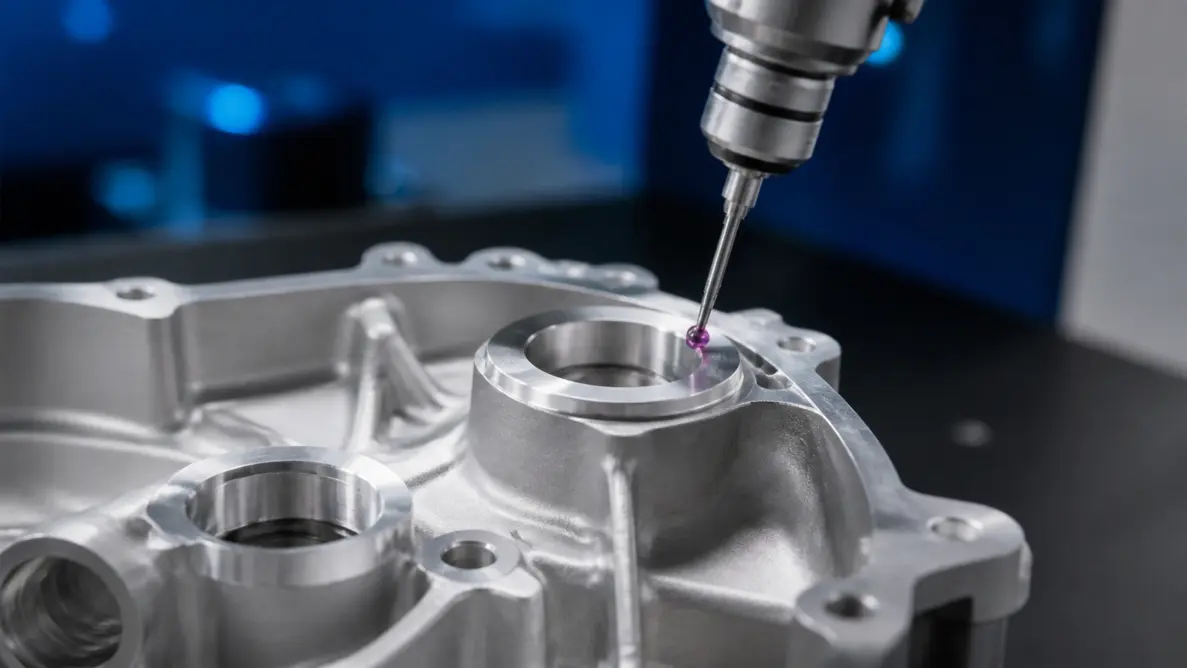
Casting Tolerances Explained
How ISO 8062 CT grades, ICI linear tolerance and NADCA standards work, so you know which features to nominate for machining.
Read the guideSurface Finish Chart
Ra values, symbols and process ranges in one place, with how to call a finish out correctly on the drawing.
Read the guide
What Does a Metal Part Cost?
Tooling, alloy, volume and post-processing broken down by process, with the numbers behind a casting quote.
Read the guideSwipe for all three guides
