CNC Turning Services
IATF 16949:2016 certified precision CNC turned parts in metals and plastics. Prototype to production, one turnkey partner.

What Is CNC Turning?
CNC turning is a subtractive manufacturing process where a workpiece is clamped in a rotating chuck and shaped by a computer-controlled cutting tool that removes material as the part spins. A CAD model is converted into G-code, and the lathe executes cuts with repeatable accuracy to ±0.01 mm. The process is the standard method for producing cylindrical and conical parts — shafts, pins, bushings, fittings, and connectors.
Modern CNC turning centers with live tooling can also perform milling, drilling, and tapping in the same setup, eliminating secondary operations and improving positional accuracy. This is fundamentally different from CNC milling, where a rotating cutter shapes a stationary part. Meco provides turning as part of our turnkey manufacturing model — integrated with surface finishing, mechanical assembly, and global logistics, all under IATF 16949:2016 certification.

Why CNC Turning for Your Next Project
CNC turning is the most efficient way to produce precision cylindrical parts. Unlike casting or forging, turning requires zero tooling investment — go from CAD to finished parts in days, not months. Ideal for automotive, aerospace, and medical components.
Why Choose Meco for CNC Turning
Better turned parts, faster lead times, lower total cost.
Precision Turning
±0.01 mm accuracy, Ra 0.4 μm finish. Max capacity ⌀360 × 1000 mm. CMM verified to ±0.002 mm.
40+ Integrated Processes
Turning connected with milling, tapping, finishing, heat treatment, and assembly. One partner, ISO 2768/286 workflow.
Metals & Plastics
Aluminum, stainless, titanium, brass, copper, plus Nylon, Delrin, PTFE, PMMA. DFM feedback saves 15–30%.
Certified Quality
IATF 16949:2016. PPAP, FAIR, SPC, full traceability. 99.99% quality rate. 99.8% on-time delivery.
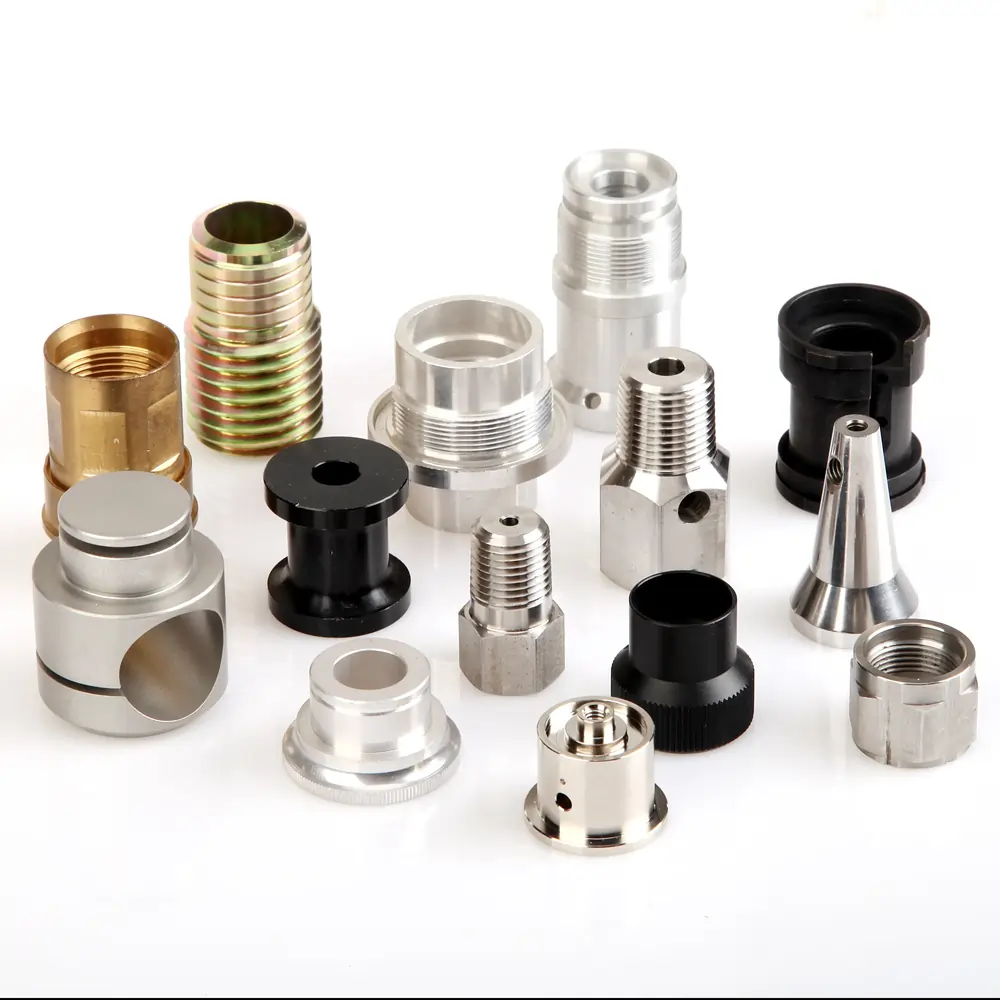
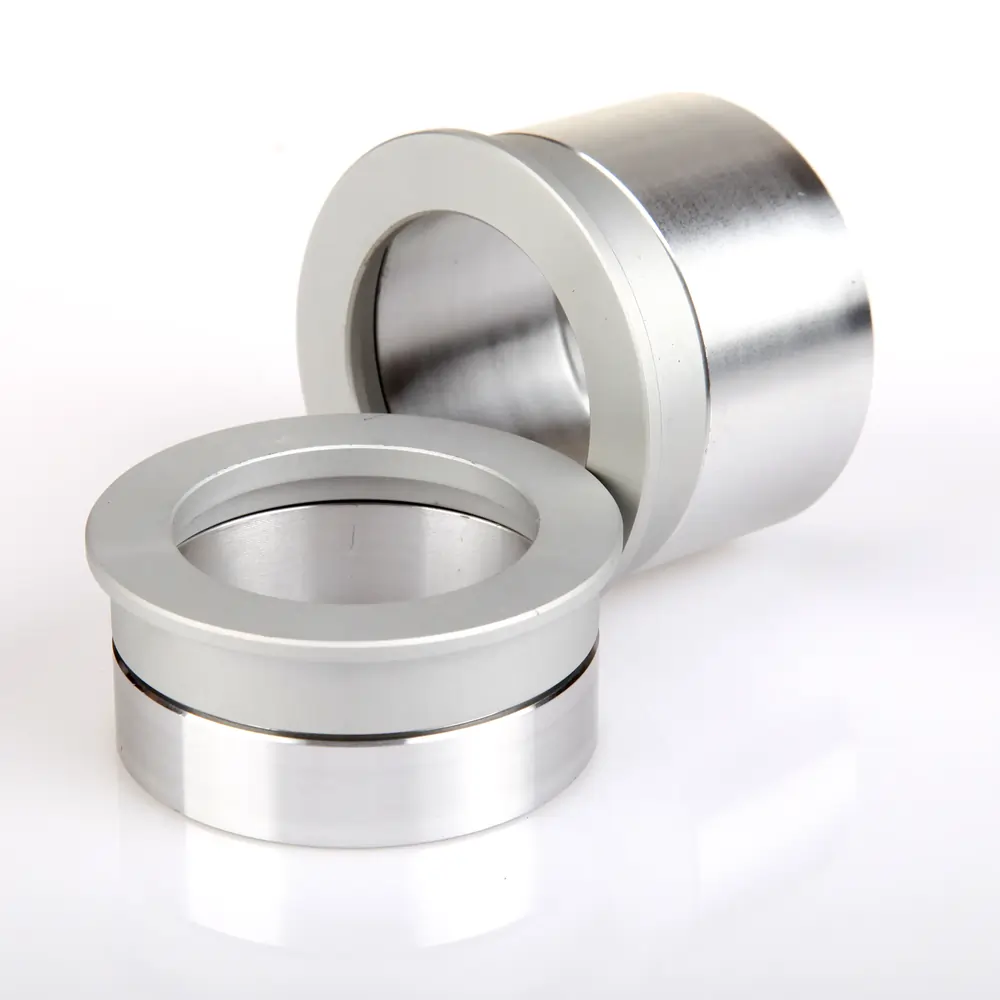
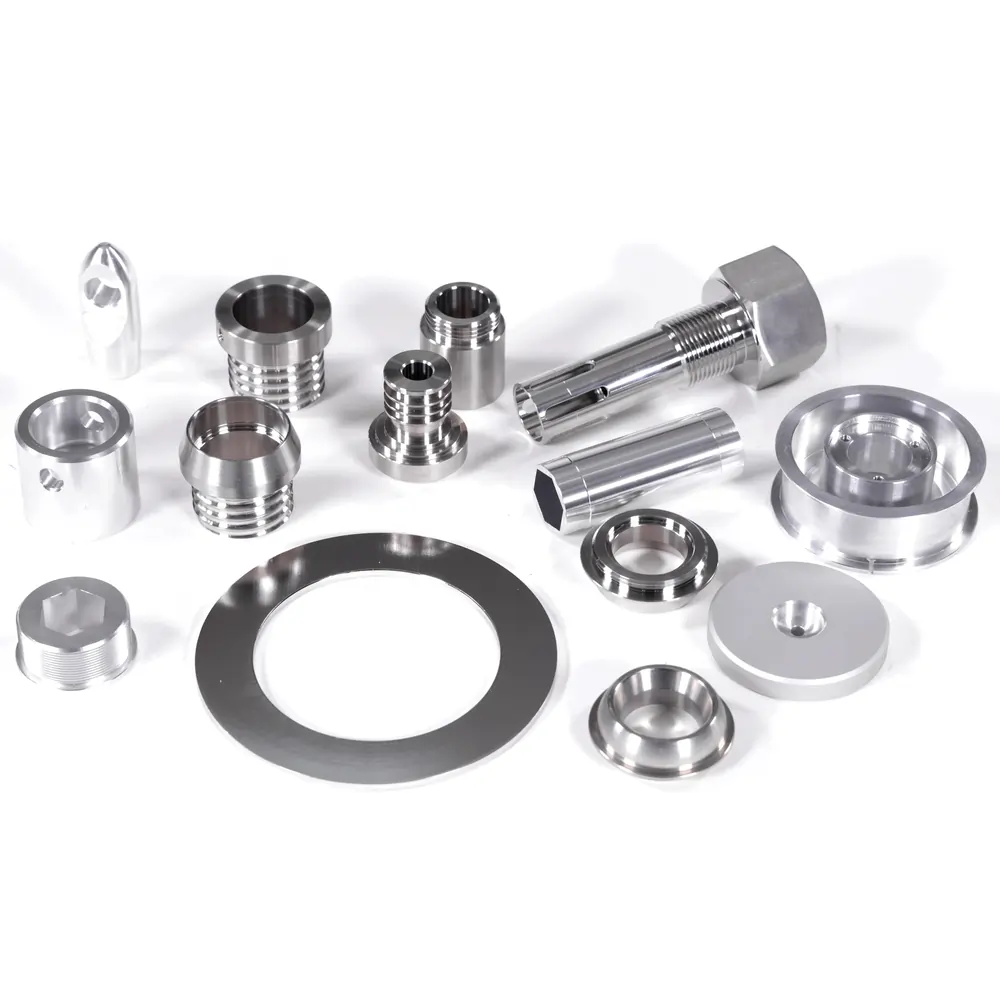
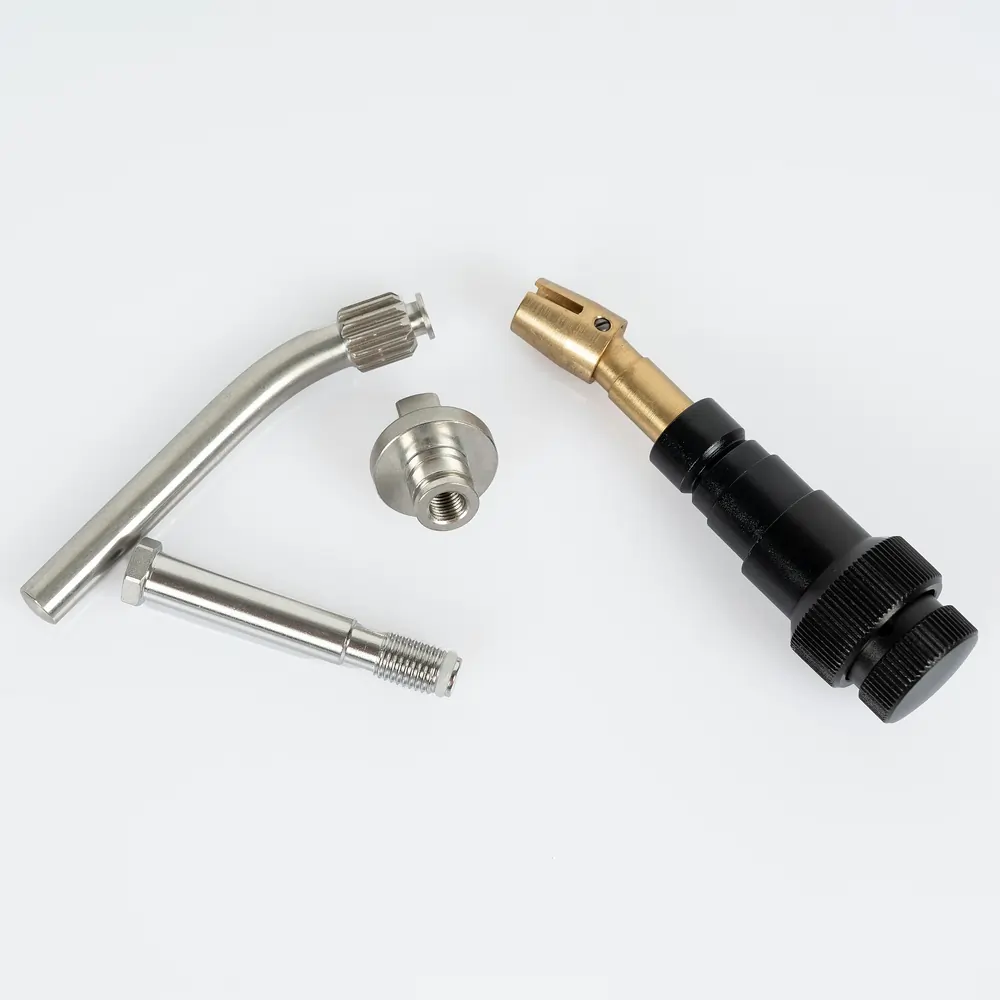
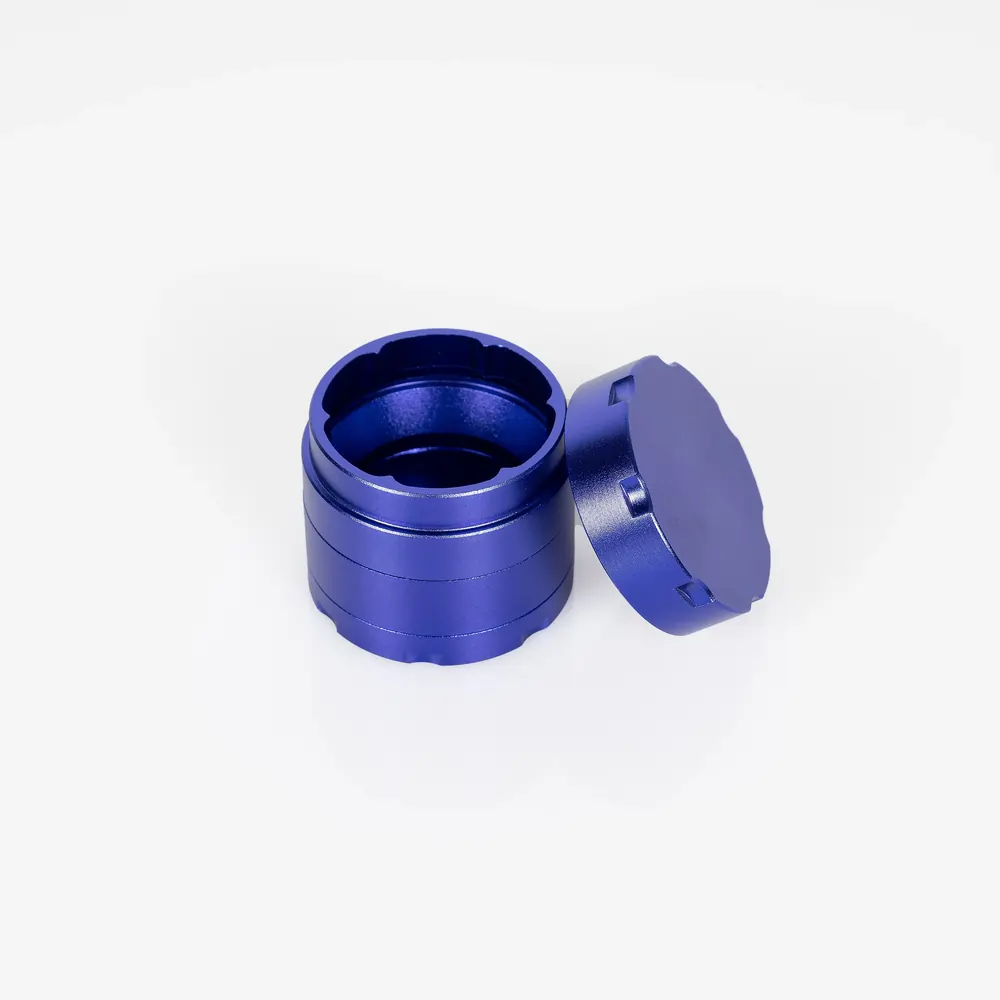
CNC Turned Parts We Manufacture
Precision turned components across metals and plastics for demanding applications.
CNC Turning Materials and Capabilities
Max capacity ⌀360 × 1000 mm. Accuracy ±0.01 mm. Surface finish Ra 0.4–3.2 μm. Standards: ISO 2768, ISO 286.
Metals
| Aluminum | 6061, 7075, 5052, 2024 |
| Stainless Steel | 303, 304, 316, 17-4PH |
| Carbon Steel | 1045, 4140, 4340 |
| Brass | C360, C464 |
| Bronze | C932, C954 |
| Copper | C110, C145 |
| Titanium | Grade 2, Grade 5 |
Plastics
| PA (Nylon) | High toughness, wear resistant |
| POM (Delrin) | Low friction, dimensionally stable |
| PTFE (Teflon) | Chemical inert, ultra-low friction |
| PMMA (Acrylic) | Optically clear, UV resistant |
Ready to Start Your CNC Turning Project?
Upload your CAD files. Quotes in under 24 hours with DFM feedback.
CNC Turning Surface Finishes
| Finish | Materials | Standards |
|---|---|---|
| Anodizing (Type I/II/III) | Aluminum, Titanium | MIL-A-8625, MIL-DTL-5541F |
| Chrome Plating | Aluminum, Steel, Brass, Bronze, Copper, Zinc | – |
| Zinc Plating | Steel | ASTM B633 |
| Nickel / Electroless Nickel | Aluminum, Steel, SS, Brass, Bronze, Copper, Zinc | – |
| PVD | Aluminum, Steel, SS, Brass, Bronze, Copper, Zinc | – |
| Painting | All metals | ISO 15184, ISO 2409 |
| Powder Coating | All metals | – |
| E-Coating | All metals | – |
| Galvanizing (Hot Dip) | Steel | ASTM A123, GB/T 13912 |
CNC Turning Tolerances
| Class | 0.5–3 | 3–6 | 6–30 | 30–120 | 120–400 | 400–1000 | 1000–2000 | 2000–4000 |
|---|---|---|---|---|---|---|---|---|
| Fine (f) | ±0.05 | ±0.05 | ±0.10 | ±0.15 | ±0.20 | ±0.30 | ±0.50 | — |
| Medium (m) | ±0.10 | ±0.10 | ±0.20 | ±0.30 | ±0.50 | ±0.80 | ±1.20 | ±2.00 |
| Coarse (c) | ±0.20 | ±0.30 | ±0.50 | ±0.80 | ±1.20 | ±2.00 | ±3.00 | ±4.00 |
| V. Coarse (v) | — | ±0.50 | ±1.00 | ±1.50 | ±2.50 | ±4.00 | ±6.00 | ±8.00 |
| Class | ≤10 | 10–50 | 50–120 | 120–400 | >400 |
|---|---|---|---|---|---|
| Fine (f) | ±1° | ±0°30′ | ±0°20′ | ±0°10′ | ±0°5′ |
| Medium (m) | ±1°30′ | ±1° | ±0°30′ | ±0°15′ | ±0°10′ |
| Coarse (c) | ±3° | ±2° | ±1° | ±0°30′ | ±0°20′ |
| Class | 0.5–3 | 3–6 | >6 |
|---|---|---|---|
| Fine (f) | ±0.20 | ±0.50 | ±1.00 |
| Medium (m) | ±0.40 | ±1.00 | ±2.00 |
| System | Description |
|---|---|
| Hole Basis | Hole size fixed (H), shaft varies. Preferred for standard tooling. |
| Shaft Basis | Shaft size fixed (h), hole varies. Used with standard shafts. |
| Fit | Type | Application |
|---|---|---|
| H7/g6 | Clearance | Precision sliding fit |
| H7/h6 | Trans/Clear | Accurate location |
| H7/p6 | Interference | Press fit (force req) |
Precision CNC Turning for Critical Industries
High-precision lathe machining for complex geometries — from rapid prototyping to high-volume production with micron-level accuracy across 10 sectors.
Aerospace Parts Manufacturing
Flight-critical turned components with zero-defect reliability. We machine complex bushings, hydraulic fittings, and fasteners from titanium, Inconel, and stainless steel — holding aerospace-grade tolerances under high-stress thermal and fatigue conditions.
Automotive Parts Manufacturing
High-volume turned powertrain and chassis components under IATF 16949 quality. Precision valve bodies, axle shafts, and sensor housings machined from aluminium, carbon steel, and stainless alloys to meet stringent OEM specifications and PPAP requirements.
Medical & Healthcare
Precision turned parts for diagnostic, surgical, and patient-care devices. Implant pins, catheter tips, instrument handles, and rotor assemblies machined from biocompatible 316L and titanium with full lot-level traceability and PPAP documentation for regulatory compliance.
Heavy Equipment Manufacturing
Large-diameter turned parts for construction, mining, and agriculture. Hydraulic cylinder rods, spindle shafts, and bearing housings from 4140/4340 high-strength steels — heat-treated, ground, and chrome-plated in-house to withstand extreme loads and harsh field environments.
Industrial Manufacturing
Precision turned shafts, couplings, and custom hardware for pumps, motors, and automation systems. Integrated secondary operations — milling, drilling, tapping, and surface finishing — in a single setup reduce lead time, vendor count, and per-part cost across industrial programs.
Consumer Electronics
Miniature turned components for consumer devices — precision connector pins, camera barrel housings, speaker grille inserts, and wearable casings. Swiss-type turning delivers ±0.003 mm on small-diameter parts with mirror-class surface finish and burr-free edges.
Telecommunication
High-precision turned and machined parts for 5G base stations, RF cavity filters, waveguide components, and antenna assemblies. We achieve the dimensional accuracy and surface conductivity required for signal integrity in modern telecommunication infrastructure.
Commercial Furniture
Precision turned legs, arms, pivots, and gas-lift mechanisms for office seating, height-adjustable desks, and modular storage. Integrated stamping, bending, and powder-coat finishing deliver complete furniture hardware ready for final assembly to BIFMA/ANSI standards.
Home Appliances
Precision turned motor shafts, valve stems, and control knobs for kitchen, laundry, and HVAC systems. Die-casting combined with CNC turning produces snap-fit housings and heat-resistant components that pass UL/IEC life-testing and salt-spray compliance.
Lighting Manufacturing
CNC turned heat sinks, lamp housings, and reflector bodies for LED, architectural, and commercial lighting. Die-casting combined with precision turning ensures optimal thermal dissipation, tight light-distribution tolerances, and durable anodised or powder-coated finishes.
When to Choose CNC Turning
CNC turning is one of many ways to produce metal parts. This comparison helps you pick the right process — or let our engineers recommend the best fit.
| Factor | CNC Turning | CNC Milling | Die Casting | Forging |
|---|---|---|---|---|
| Best For | Cylindrical parts (shafts, pins, fittings, bushings) Best for round parts | Flat surfaces, pockets, complex 3D contours | Complex thin-wall castings at high volume | High-strength structural parts (gears, flanges) |
| Tolerance | ±0.01 mm | ±0.01 mm | ±0.05–0.10 mm (as-cast) | ±0.5–1.0 mm (as-forged) |
| Surface Finish | Ra 0.4–3.2 μm Excellent on OD | Ra 0.4–3.2 μm | Ra 1.6–6.3 μm | Ra 3.2–12.5 μm |
| Volume | 1–100,000+ | 1–50,000 | 1,000–1,000,000+ | 500–500,000+ |
| Tooling Cost | None Lowest startup | None | High (die required) | High (dies required) |
| First Part Lead | 1–2 weeks | 1–2 weeks | 4–8 weeks | 4–8 weeks |
| Meco Page | You are here | CNC Milling → | Die Casting → | Forging → |
Quality Assurance & Documentation
Every CNC turned part ships with full traceability and documentation. Our IATF 16949:2016 quality management system governs every process from raw material receiving through final inspection and packaging.
PPAP Documentation
Full Production Part Approval packages including control plans, process flow, and dimensional results.
First Article Inspection
FAI reports with full dimensional verification of first production parts against drawing specifications.
CMM Inspection Reports
Coordinate Measuring Machine verification to ±0.002 mm with GD&T evaluation and deviation reports.
Full Traceability
Lot-level tracking from raw material through every machining, finishing, and assembly step.
Material Certs & CoA
Mill test reports, Certificates of Analysis, and compliance documentation with every shipment.
REACH & RoHS
Full regulatory compliance documentation for EU REACH and RoHS directives.
CTQ Reporting
Critical-to-Quality tracking with SPC charts, Cpk analysis, and trend monitoring.
Conflict Minerals
CMRT documentation per SEC/Dodd-Frank requirements for 3TG minerals sourcing.
CNC Turning FAQ
What is CNC turning?
CNC turning is a subtractive process where a rotating workpiece is shaped by a computer-controlled cutting tool on a lathe. It produces cylindrical, conical, and contoured parts — shafts, pins, bushings, fittings — with accuracy to ±0.01 mm.
What is the difference between CNC turning and CNC milling?
In turning, the workpiece rotates (ideal for round parts). In milling, the cutter rotates (ideal for flat surfaces and 3D shapes). Many parts benefit from both, which is why Meco integrates both under one roof.
What materials can be CNC turned?
Metals: Aluminum (6061, 7075), Stainless Steel (303, 304, 316, 17-4PH), Carbon Steel, Brass, Bronze, Copper, Titanium. Plastics: Nylon, Delrin, PTFE, PMMA.
What tolerances can CNC turning achieve?
±0.01 mm per ISO 2768/286. Surface finishes Ra 0.4–3.2 μm. CMM verified to ±0.002 mm. See our CNC machining cost guide for tolerance-cost tradeoffs.
What is live tooling in CNC turning?
Live tooling means powered cutting tools on the lathe that perform milling, drilling, and tapping while the part stays in the chuck. This eliminates secondary setups for radial holes, flats, slots, and grooves.
What industries use CNC turned parts?
Automotive (shafts, fittings), aerospace (bushings, actuators), medical (surgical instruments), heavy equipment (hydraulic rods), industrial (valve stems), and electronics (connector pins).
How do I get a quote for CNC turned parts?
Submit STEP/IGES files with material and finish requirements via our contact page. Quotes in under 24 hours with DFM feedback. No MOQ — 10 pcs to 10M+.
Can you handle prototype and high-volume turning?
Yes. Same IATF 16949:2016 quality at every volume. Facilities in Thailand (20,000 m²) and China (16,000 m²) for production scale.
How to Get Started
Upload STEP/IGES files with material and finish requirements via our quote form.
We analyze your design and deliver a detailed quote with DFM optimization in under 24 hours.
Parts are turned, finished, and inspected with CMM verification and full documentation (FAI, COA).
Parts ship globally with quality docs. Same partner, same quality — 10 pcs to 10M+.
CNC Turning Resources

CNC Milling and Turning: Complete Guide
Learn how milling and turning work together, when to use each process, and how combining them under one manufacturer cuts cost and lead time.
Read the guide →
How Much Does CNC Machining Cost?
Understand real pricing drivers — hourly rates, material costs, batch economics — and how turnkey manufacturing reduces total spend.
Read the guide →
CNC Machine Costs: Buy vs. Outsource
Compare the real cost of owning CNC equipment vs. outsourcing to a contract manufacturer. CapEx, hourly rates, and break-even analysis.
Read the breakdown →