4 Axis CNC Machining Services for Multi‑Sided Precision Parts
IATF 16949:2016 certified 4‑axis CNC machining for metals and plastics. Machine complex features on multiple sides in a single setup — from prototype to full production.

What Is 4 Axis CNC Machining?
4 axis CNC machining is a manufacturing process where a computer‑controlled cutting tool shapes material along four directions at once. Three of those directions are straight lines — left/right (X), forward/back (Y), and up/down (Z) — just like a standard 3‑axis CNC machine. The fourth direction is a rotation, called the A‑axis, which spins the workpiece while the cutter is moving. This extra rotation lets the machine reach multiple sides, angled features, and curved surfaces without stopping to reposition the part by hand.
Because fewer manual setups are needed, parts come out more consistent, production is faster, and costs are lower. 4‑axis CNC machining sits between basic 3‑axis work (best for flat, simple parts) and advanced 5‑axis machining (best for highly complex shapes like turbine blades). It gives you the best balance of capability and cost when your parts need features on more than one face — such as angled holes, helical grooves, or patterns around a cylinder.
Meco performs 4‑axis machining as part of our full custom CNC machining services, combining it with milling, turning, drilling, and tapping under one roof. All work follows our IATF 16949:2016 quality system with complete traceability from raw material to shipped part.
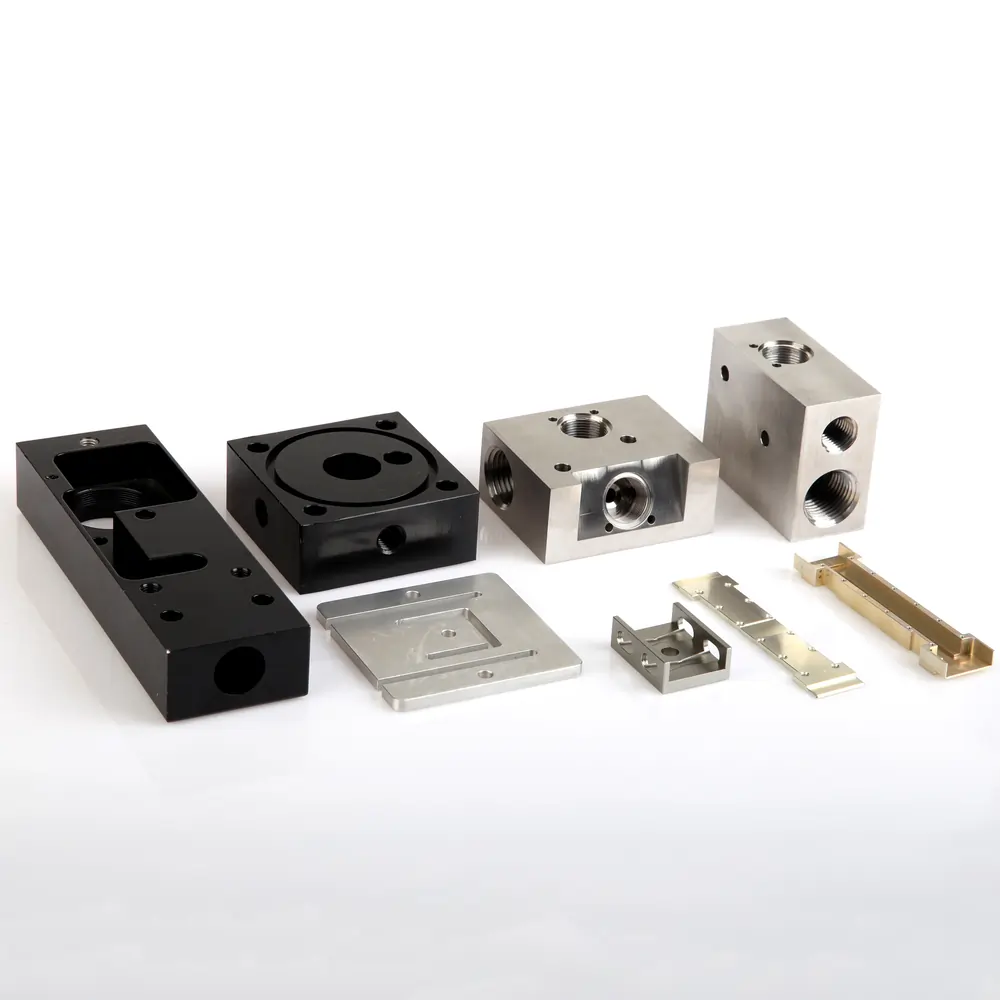
Why 4 Axis CNC Machining for Your Parts
4‑axis CNC machining is the fastest way to produce parts that need work on multiple sides without paying for full 5‑axis complexity. The rotary axis eliminates manual flipping — your part stays clamped once, and the machine handles the rest. It's the go‑to for automotive, aerospace, and medical components that need multi‑face precision at a reasonable cost.
Why Choose Meco for 4 Axis CNC Machining
Multi‑face precision, reliable delivery, lower total cost.
±0.01 mm Precision
Repeatable accuracy across every face. CMM inspection to ±0.002 mm available. ISO 2768 and ISO 286 compliant.
Vertically Integrated
CNC machining, casting, forging, stamping, finishing, and assembly — all under one roof. One PO, one quality system, shorter lead times.
7 Metals + Plastics
Aluminum, steel, stainless steel, brass, bronze, copper, titanium — plus Nylon, Delrin, PTFE, and Acrylic. We match tooling to material.
DFM Before Cutting
Our engineers review your design for 4‑axis suitability — optimizing orientation, fixturing, and toolpaths. DFM feedback saves 15–30% on part cost.
Our 4 Axis CNC Machining Capabilities
From indexed positioning to continuous rotary milling — we match the right 4‑axis strategy to your part geometry.
Indexed 4‑Axis Machining
The rotary axis locks the workpiece at a set angle, then the machine cuts as if it were a 3‑axis operation. The part is rotated to the next angle and locked again. This is the most common 4‑axis method — perfect for parts that need features on multiple flat faces like housings, brackets, and manifolds.
- Multi‑face machining in one setup
- Ideal for angled holes and slots
Continuous 4‑Axis Milling
The rotary axis moves simultaneously with the X, Y, and Z axes while the cutter is engaged. This allows smooth, flowing cuts around cylindrical or curved parts — such as helical grooves, spiral flutes, cam profiles, and wrap‑around contours that cannot be produced with indexed positioning.
- Helical and spiral toolpaths
- Smooth curved surfaces
Large Work Envelope
Our 4‑axis machines handle workpieces up to 1016 × 508 × 635 mm — large enough for full‑size housings, enclosures, and structural brackets. Whether your part weighs 50 grams or 50 kilograms, we have the capacity and fixturing to machine it accurately.
- 1016 × 508 × 635 mm envelope
- Small parts to large assemblies
4 Axis CNC Machining Materials & Specifications
Metals
| Aluminum | 6061, 7075, 5052, 2024 |
| Stainless Steel | 303, 304, 316, 17‑4PH |
| Carbon Steel | 1045, 4140, 4340 |
| Brass | C360, C464 |
| Bronze | C932, C954 |
| Copper | C110, C145 |
| Titanium | Grade 2, Grade 5 |
Plastics
| PA (Nylon) | High toughness, wear resistant |
| POM (Delrin) | Low friction, dimensionally stable |
| PTFE (Teflon) | Ultra‑low friction, chemical resistant |
| PMMA (Acrylic) | Optically clear, UV resistant |
4 Axis CNC Machining Tolerances
| Class | 0.5–3 | 3–6 | 6–30 | 30–120 | 120–400 | 400–1000 | 1000–2000 | 2000–4000 |
|---|---|---|---|---|---|---|---|---|
| Fine (f) | ±0.05 | ±0.05 | ±0.10 | ±0.15 | ±0.20 | ±0.30 | ±0.50 | — |
| Medium (m) | ±0.10 | ±0.10 | ±0.20 | ±0.30 | ±0.50 | ±0.80 | ±1.20 | ±2.00 |
| Coarse (c) | ±0.20 | ±0.30 | ±0.50 | ±0.80 | ±1.20 | ±2.00 | ±3.00 | ±4.00 |
| V. Coarse (v) | — | ±0.50 | ±1.00 | ±1.50 | ±2.50 | ±4.00 | ±6.00 | ±8.00 |
| Class | ≤10 | 10–50 | 50–120 | 120–400 | >400 |
|---|---|---|---|---|---|
| Fine (f) | ±1° | ±0°30′ | ±0°20′ | ±0°10′ | ±0°5′ |
| Medium (m) | ±1°30′ | ±1° | ±0°30′ | ±0°15′ | ±0°10′ |
| Coarse (c) | ±3° | ±2° | ±1° | ±0°30′ | ±0°20′ |
| Class | 0.5–3 | 3–6 | >6 |
|---|---|---|---|
| Fine (f) | ±0.20 | ±0.50 | ±1.00 |
| Medium (m) | ±0.40 | ±1.00 | ±2.00 |
| System | Description |
|---|---|
| Hole Basis | Hole size fixed (H), shaft varies. Preferred for standard tooling. |
| Shaft Basis | Shaft size fixed (h), hole varies. Used with standard shafts. |
| Fit | Type | Application |
|---|---|---|
| H7/g6 | Clearance | Precision sliding fit |
| H7/h6 | Trans/Clear | Accurate location |
| H7/p6 | Interference | Press fit (force req) |
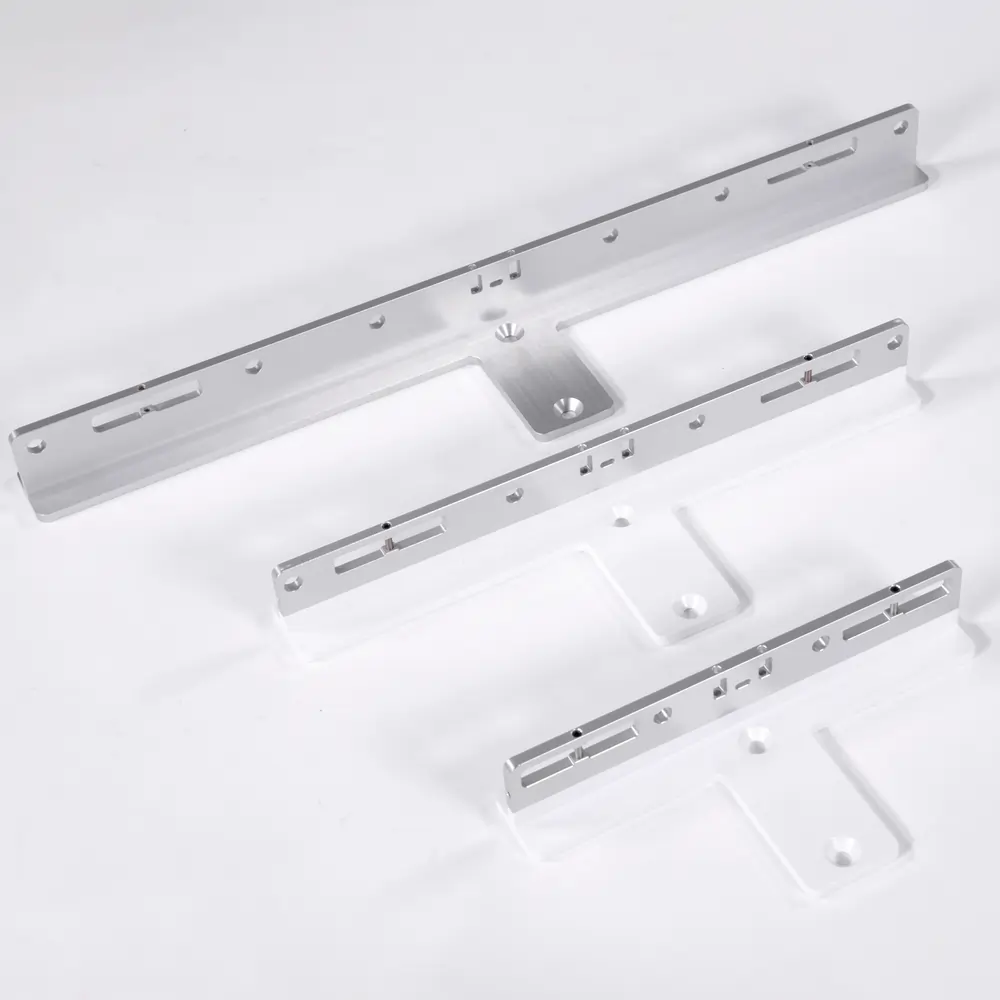
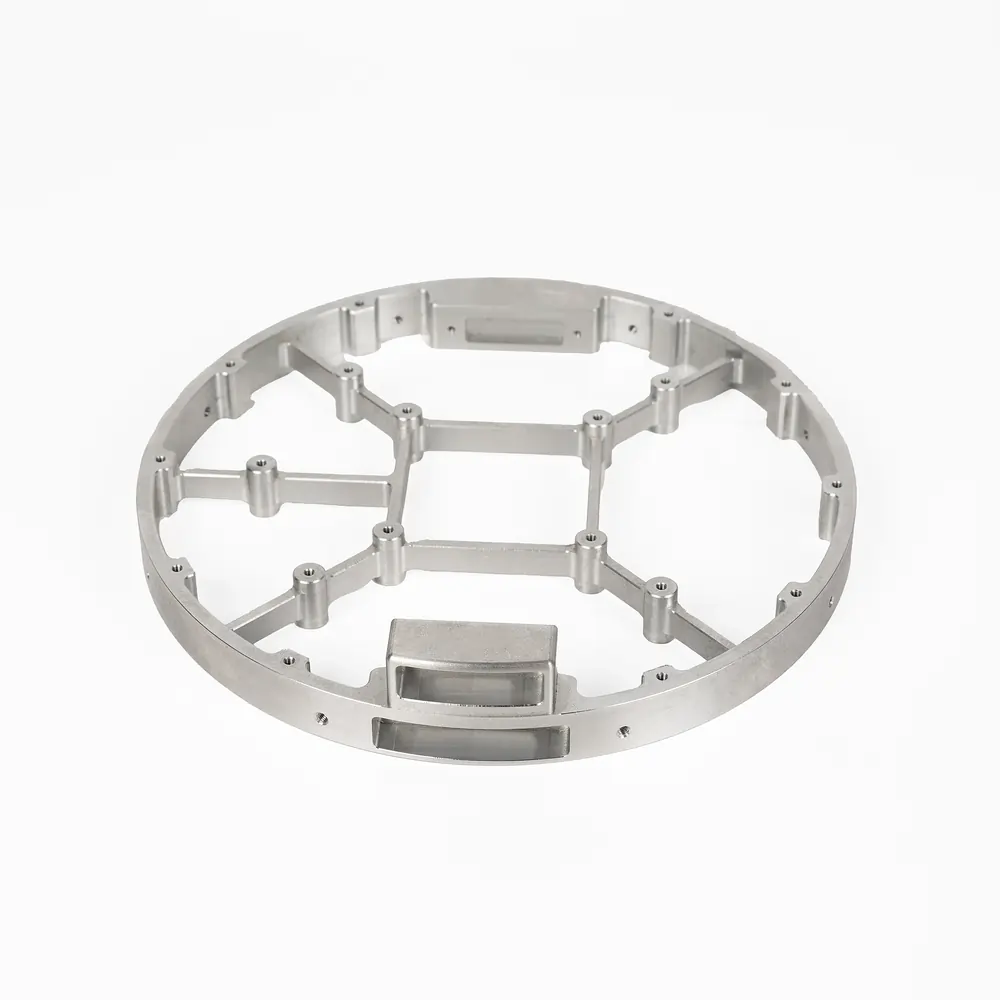
4 Axis CNC Machined Parts Gallery
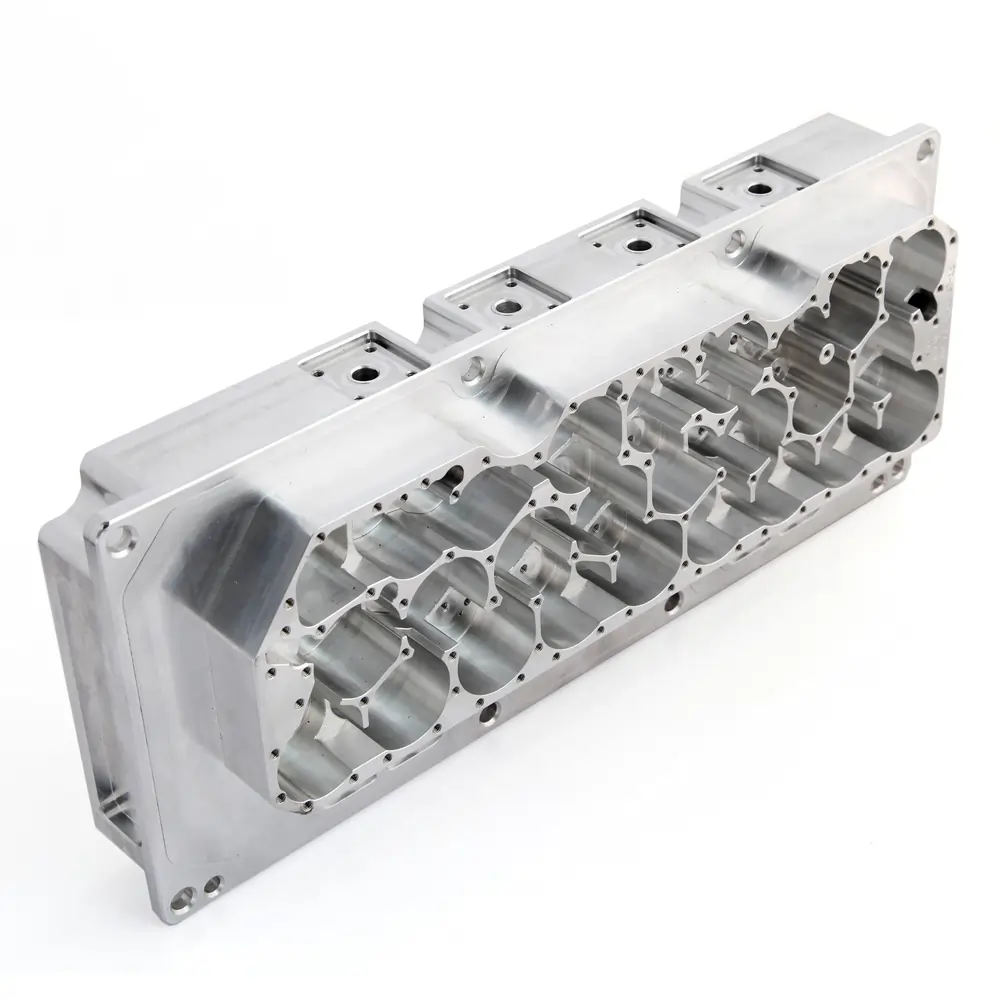
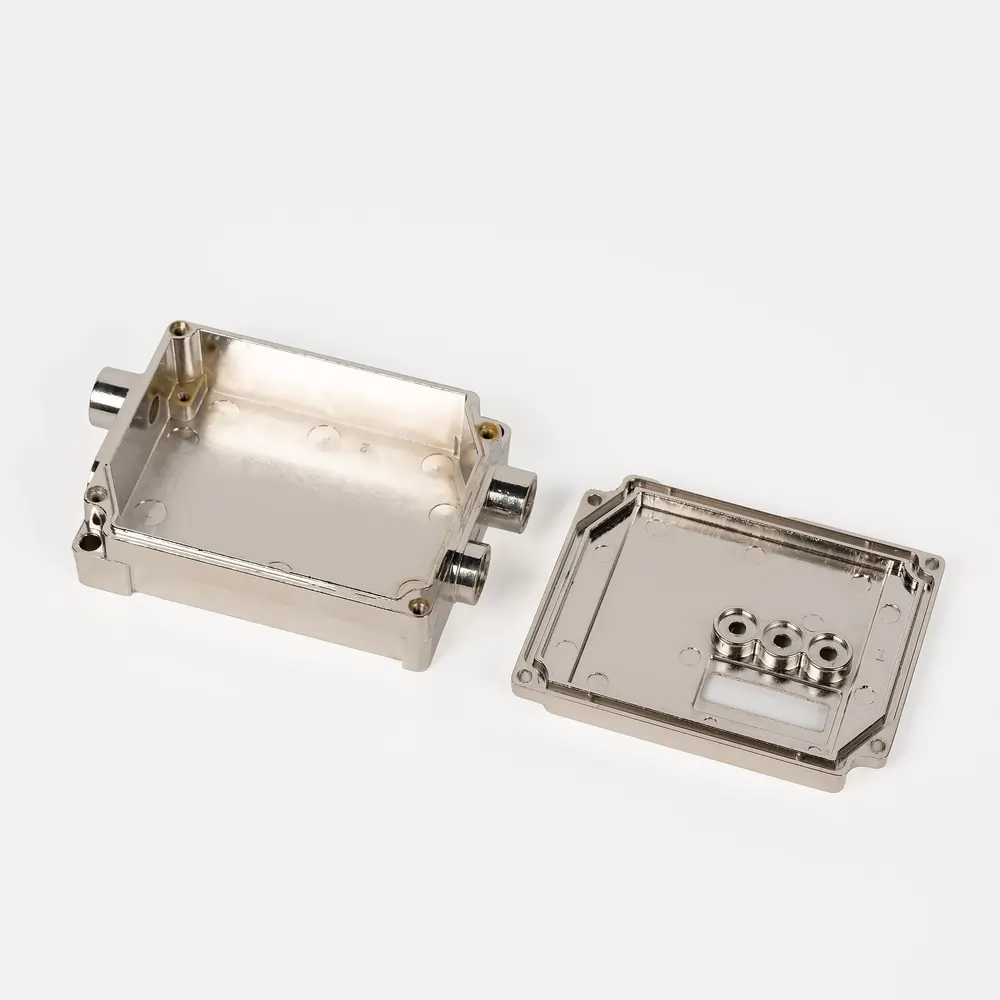
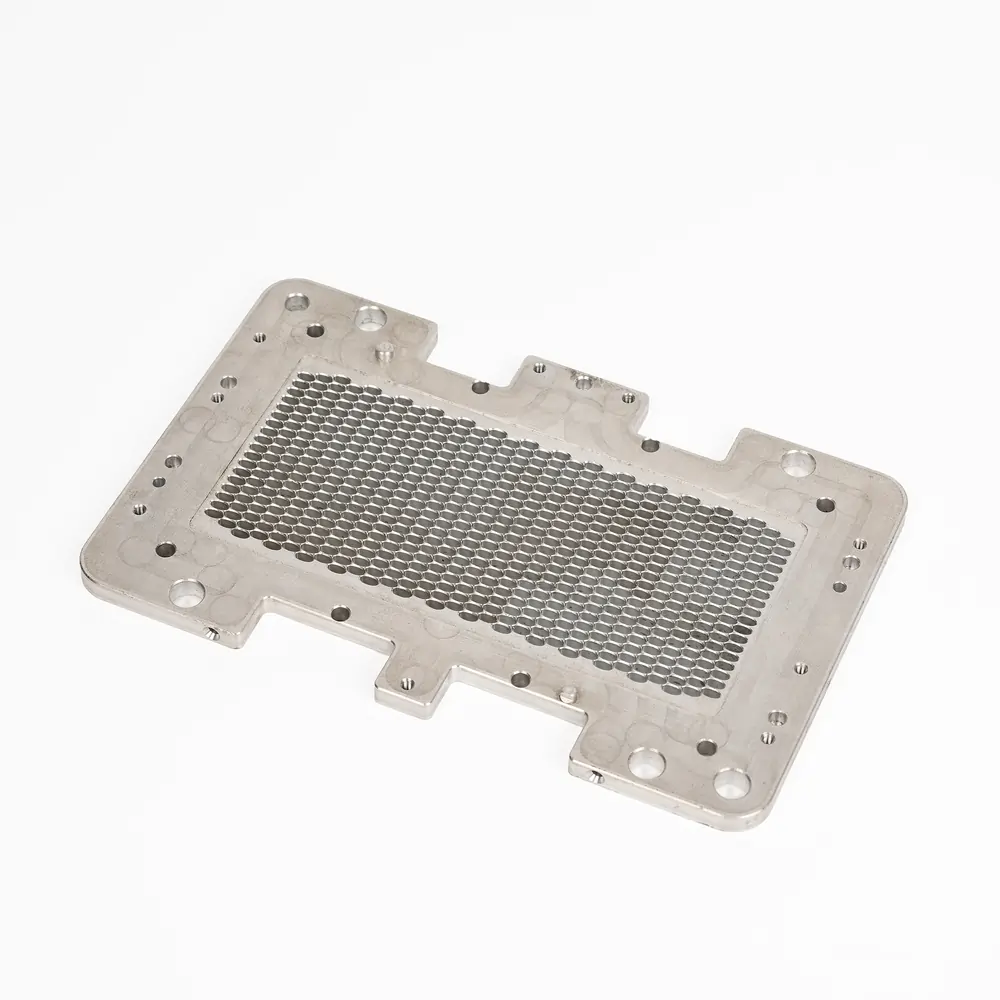
3 Axis vs 4 Axis vs 5 Axis CNC — Which Do You Need?
Not sure which machining approach fits your part? This side‑by‑side comparison helps you choose based on part complexity, budget, and production needs.
| Feature | 3‑Axis CNC | 4‑Axis CNC | 5‑Axis CNC |
|---|---|---|---|
| How It Moves | X, Y, Z (straight lines only) | X, Y, Z + 1 rotary axis | X, Y, Z + 2 rotary axes |
| Best For | Flat surfaces, simple shapes | Multi‑sided parts, angled holes, cylindrical features | Organic contours, turbine blades, undercuts |
| Setup Efficiency | Part must be flipped manually for each side | Rotary axis eliminates most manual repositioning | Single setup for all features |
| Accuracy | ±0.01 mm | ±0.01 mm with better repeatability | ±0.005 mm ultra‑precision |
| Typical Parts | Plates, brackets, simple housings | Manifolds, housings, angled brackets, shafts | Impellers, implants, blisks |
| Cost | Most economical | Balanced — capability vs. cost | Higher — justified for complex geometry |
Need Simpler or More Complex Machining?
Explore our full range of 3‑axis, 4‑axis, and 5‑axis CNC capabilities. From flat plates to turbine blades — one partner handles it all.
4 Axis CNC Machined Parts for Critical Industries
Multi‑face precision for mechanical, structural, and electronic assemblies — from rapid prototyping to high‑volume production across 10 sectors.
Automotive Parts Manufacturing
4‑axis CNC machining produces transmission housings, suspension linkages, engine brackets, and EV battery enclosures with precise angular features. The rotary axis machines angled mounting holes and contoured surfaces in a single clamping — reducing cycle time and improving part‑to‑part consistency across high‑volume production runs.
Aerospace Parts Manufacturing
4‑axis machining produces satellite brackets, structural ribs, turbine blade roots, and avionics enclosures in titanium, aluminum, and stainless steel. Multi‑face machining in a single setup maintains the dimensional integrity required for aerospace structural components with angled interfaces.
Medical & Healthcare
Precision 4‑axis machining for surgical instrument handles, implant components, diagnostic equipment housings, and fluid management connectors. The rotary axis enables smooth contoured surfaces and angled features with superior finishes suitable for sterilization‑compatible medical assemblies.
Telecommunication
4‑axis CNC machining mills side ports, angled cooling fins, and multi‑face mounting features on RF housings, waveguides, and network enclosures. Rotational indexing enables precise angular geometry for signal‑critical telecom components that require tight dimensional control.
Heavy Equipment Manufacturing
Large‑scale 4‑axis machining for construction equipment linkages, hydraulic manifolds, valve bodies, and heavy machinery mounting components. The rotary axis provides access to angled ports and multi‑face features on parts too complex for standard 3‑axis setups.
Industrial Manufacturing
Robust 4‑axis machining for heavy‑duty fittings, pump casings, motor housings, and machinery components with complex rotational features. Accurate multi‑face machining improves the performance and durability of industrial process equipment and fluid control systems.
Consumer Electronics
Precision 4‑axis machined enclosures, circuit board housings, connector bodies, and thermal management components with fine angular details. Multi‑face machining in one setup produces clean cosmetic surfaces ready for anodizing or powder coating.
Lighting Manufacturing
Rotational machining produces intricate heat sinks, LED housings, and optical reflectors with precise angular geometries. 4‑axis milling creates smooth curved fin profiles and multi‑face mounting features for premium architectural and commercial lighting assemblies.
Commercial Furniture
Architectural hardware, table bases, and designer fittings machined with precise angular geometries for premium furniture applications. 4‑axis capability enables complex connector profiles and angled mounting features in a single setup.
Home Appliances
Consumer appliance knobs, mounting brackets, and internal mechanisms with ergonomic angular features and precise tolerances. 4‑axis machining handles multi‑face components efficiently for high‑volume home appliance production lines.
Quality Assurance & Documentation
Every 4‑axis CNC machined part ships with full traceability and documentation. Our IATF 16949:2016 quality management system governs every process from raw material receiving through final inspection and packaging.
CMM Inspection
Coordinate Measuring Machine verification to ±0.002 mm. Full GD&T evaluation with graphical deviation reports across all machined faces.
First Article Inspection
FAI reports with full dimensional verification of first production parts against your drawings before volume production begins.
In‑Process SPC
Statistical Process Control monitors critical dimensions during production — catching drift before it becomes a defect. Real‑time quality assurance.
Full Traceability
Lot‑level tracking from raw material through every machining, finishing, and assembly step. Material certs, COA, and complete audit trail.
4 Axis CNC Machining FAQ
What is 4 axis CNC machining?
4‑axis CNC machining adds a spinning rotation (called the A‑axis) to the standard three straight‑line movements (X, Y, Z). This lets the machine rotate your part while cutting, so it can reach multiple sides, angled holes, and curved surfaces without stopping to reposition. Think of it like a rotisserie — the part turns while the tool works on it.
How is 4 axis different from 3 axis machining?
A 3‑axis machine can only move in straight lines (left/right, forward/back, up/down). To machine a different side of your part, a human operator must stop the machine, unclamp the part, flip it, re‑clamp it, and restart. A 4‑axis machine rotates the part automatically, so multiple sides get machined in one go — faster, more accurate, and with no risk of misalignment from re‑clamping.
When should I choose 4 axis over 5 axis?
Choose 4‑axis when your part needs features on multiple flat faces, angled holes, or patterns around a cylinder — but doesn't require the simultaneous multi‑direction cutting that 5‑axis machining provides. 4‑axis gives you most of the flexibility at a lower cost per part. If your part has deep undercuts, organic flowing shapes, or requires the tool to approach from every angle simultaneously, 5‑axis is the better choice.
What materials can be 4 axis CNC machined?
We machine aluminum, steel, stainless steel, brass, bronze, copper, and titanium — plus engineering plastics like Nylon, Delrin (POM), Teflon (PTFE), and Acrylic (PMMA). The specific alloy grades we work with include 6061, 7075, 304, 316, 17‑4PH, Grade 5 titanium, and many more.
What accuracy can 4 axis machining achieve?
Our 4‑axis CNC machines achieve ±0.01 mm accuracy with improved repeatability between faces (because the part isn't re‑clamped). For critical dimensions, CMM inspection verifies features down to ±0.002 mm. We follow ISO 2768 and ISO 286 tolerance standards.
What is the maximum part size you can machine?
Our 4‑axis work envelope is 1016 × 508 × 635 mm — large enough for full‑size housings, enclosures, and structural brackets. For parts that exceed this, we can discuss alternative fixturing strategies or our larger machining centers.
What typical parts are made with 4 axis CNC?
Common examples include housings with angled ports, manifolds, multi‑face brackets, cylindrical components with radial features, shafts with flats and holes, impeller pre‑forms, and any part requiring machining on 3 or 4 sides. Industries range from automotive and aerospace to medical devices and telecom equipment.
What file formats do you accept?
STEP (.stp) and IGES (.igs) for 3D models. PDF or DWG for 2D drawings with dimensions, tolerances, and material specifications. Upload your files through our quote form and we'll respond within 24 hours.
What certifications does Meco hold?
IATF 16949:2016 — the highest‑tier automotive quality standard, built on all ISO 9001:2015 requirements. Our quality processes include APQP, PPAP, SPC, PFMEA, and FAIR. Inspection uses CMM, go/no‑go gauges, and NDT methods including ultrasonic, dye penetrant, and X‑ray.
How to Get Started
Upload 3D models (STEP/IGES) with material, quantity, tolerance, and finish requirements via our quote form.
Our engineers review your design for 4‑axis suitability — optimizing orientation, fixturing, and toolpaths. Detailed quote with DFM feedback in under 24 hours.
Custom rotary fixtures are prepared and CAM programmers generate optimized 4‑axis toolpaths with indexed or continuous rotation strategies.
Parts are machined, inspected against drawings with dimensional reports, then packaged and shipped. Scale from 10 pcs to 10M+ with the same partner.
4 Axis CNC Machining Resources
What Is 4 Axis CNC Machining: Process, Benefits & Comparison
Deep dive into how 4‑axis CNC works, when to use it over 3 or 5‑axis, and the types of parts it produces best.
Read the guide →
Why 4 Axis CNC Is Powering North America
Discover why manufacturers across North America are adopting 4‑axis CNC to reduce costs, consolidate setups, and improve part quality.
Read the article →
How Much Does CNC Machining Cost?
Real pricing drivers — hourly rates, material costs, and batch size economics — and how turnkey manufacturing reduces your total spend.
Read the guide →